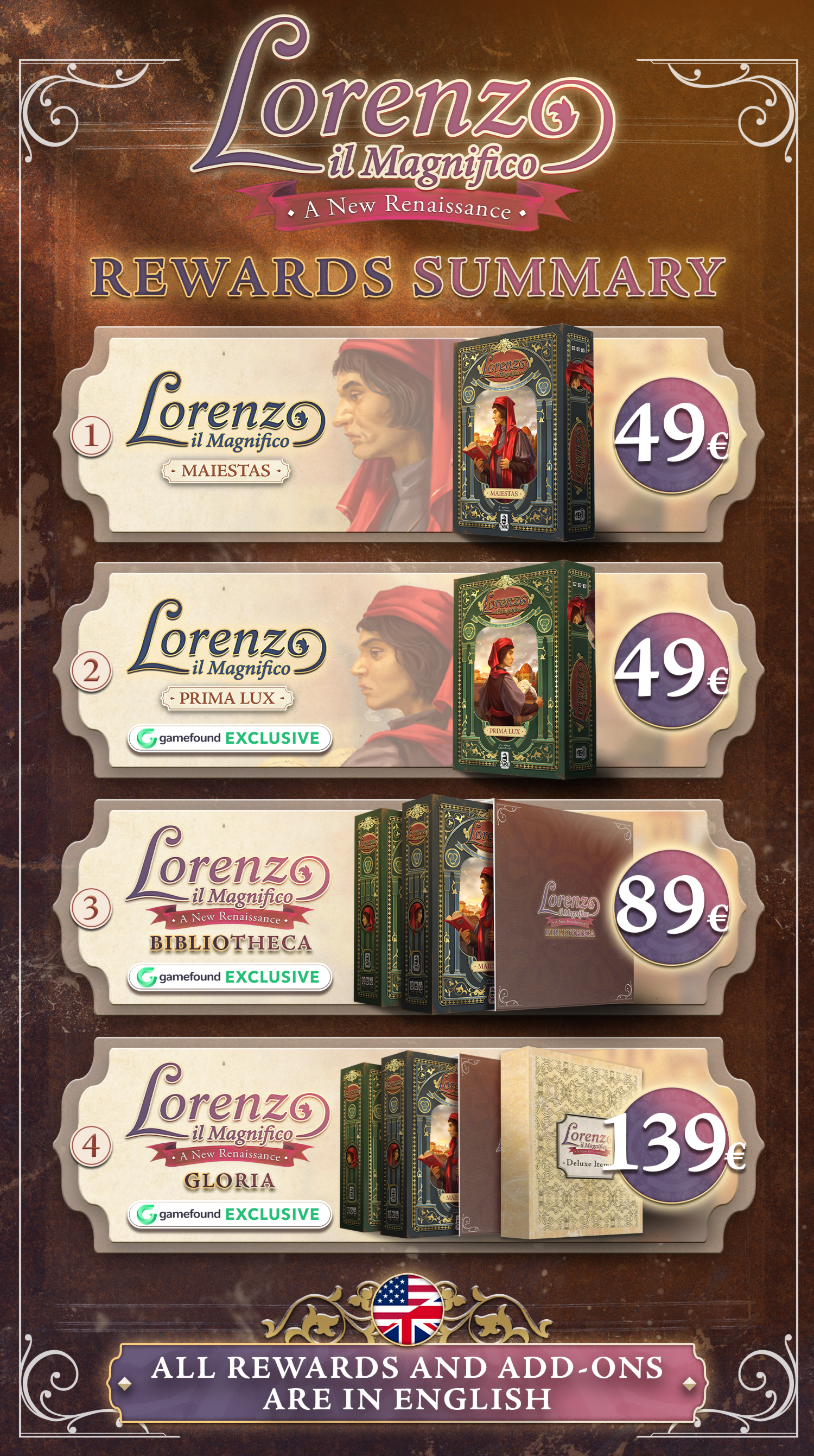
Rewards summary
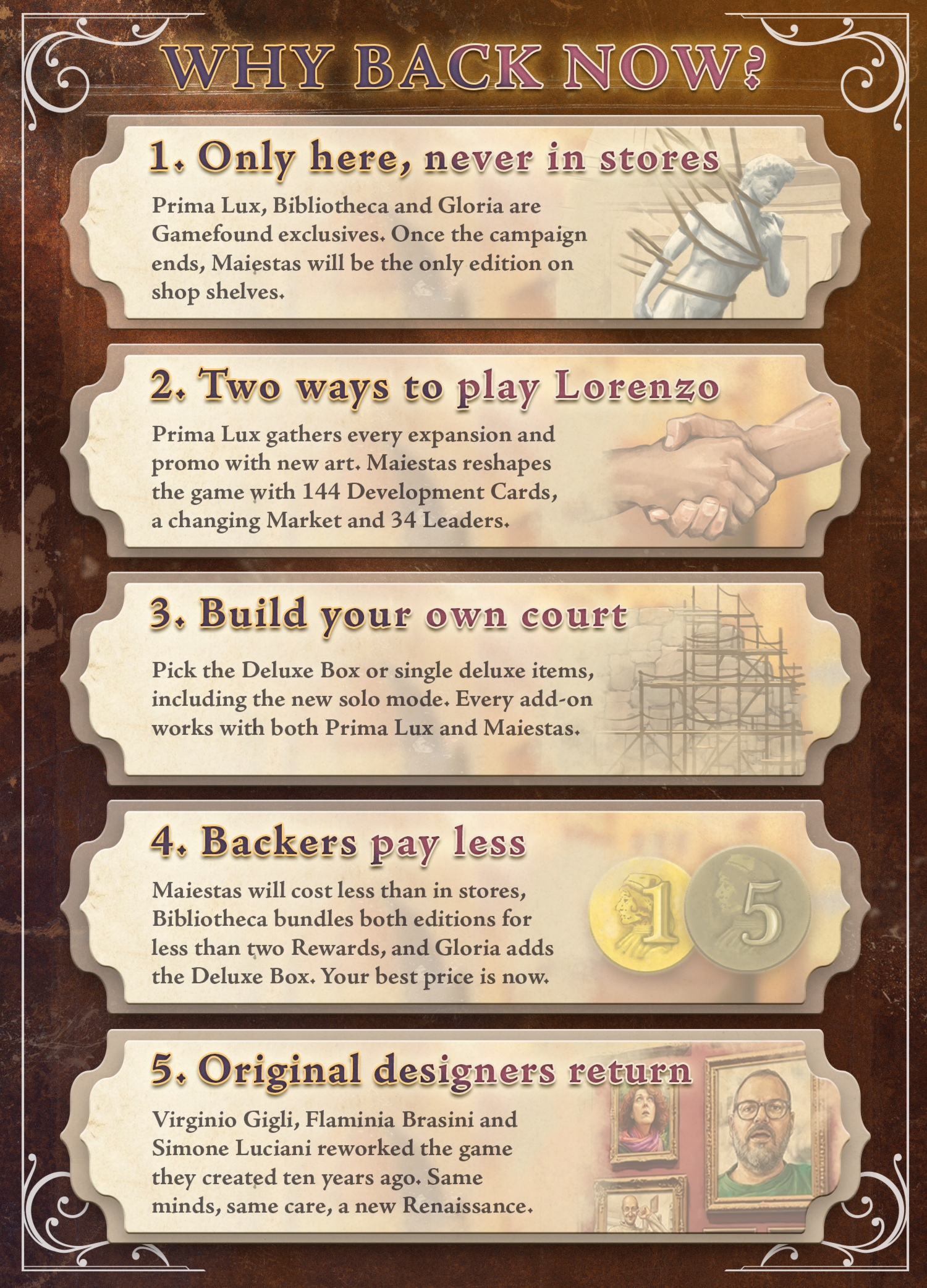
Why back now?
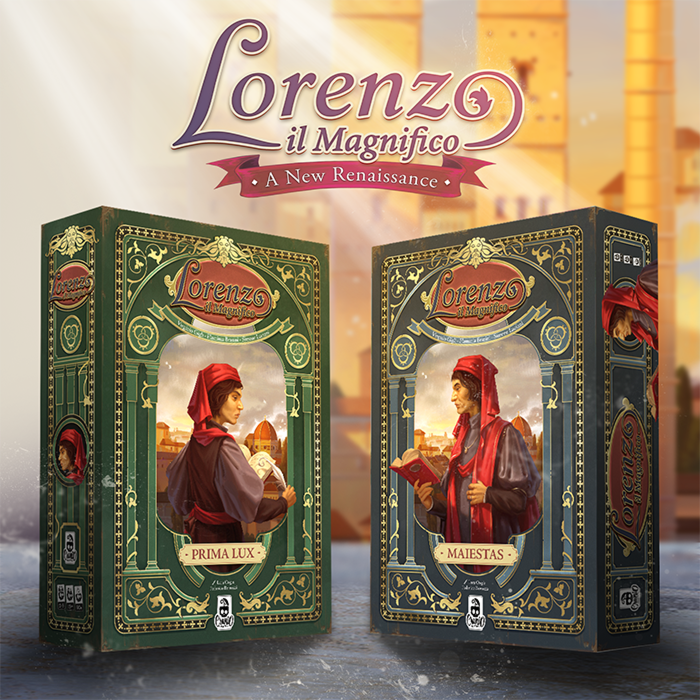
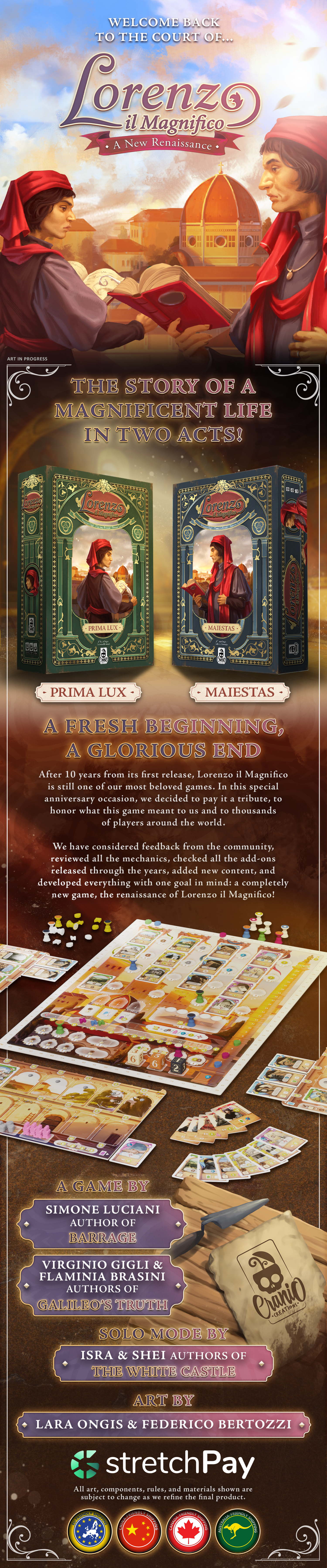
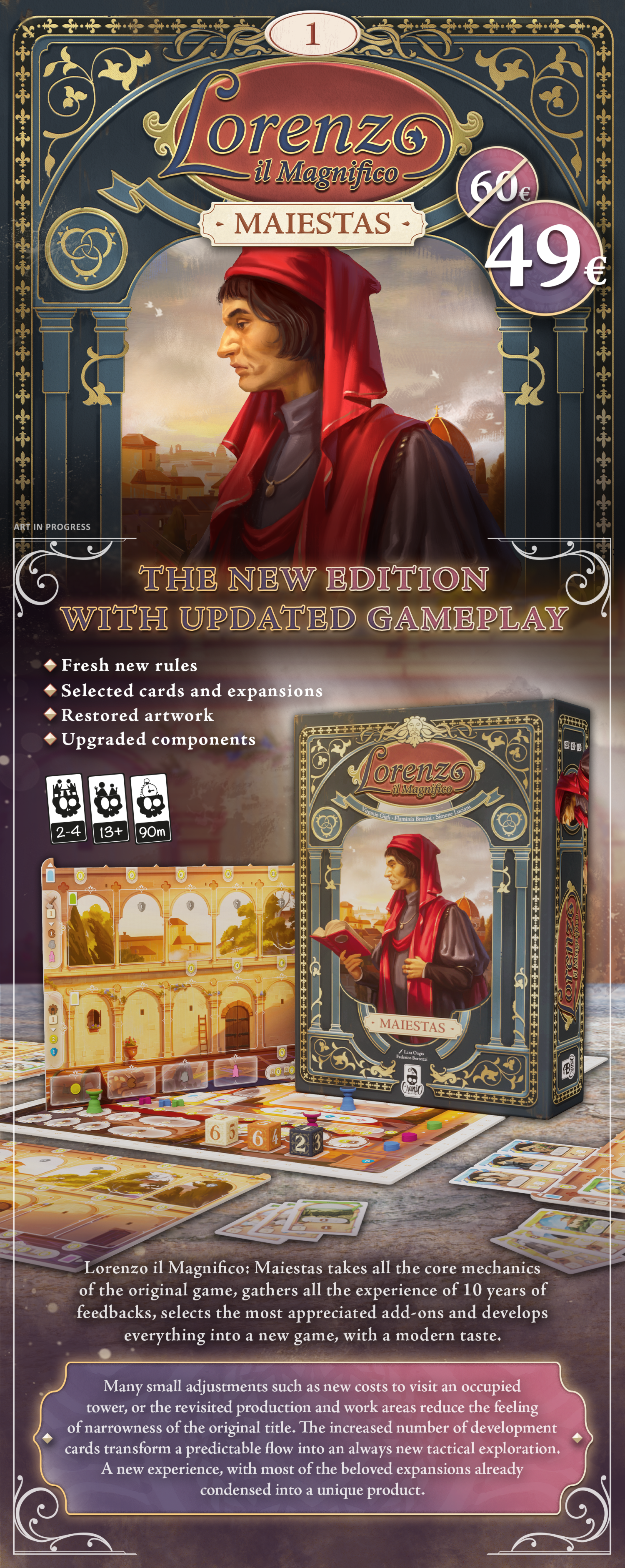
Lorenzo il magnifico - Maiestas
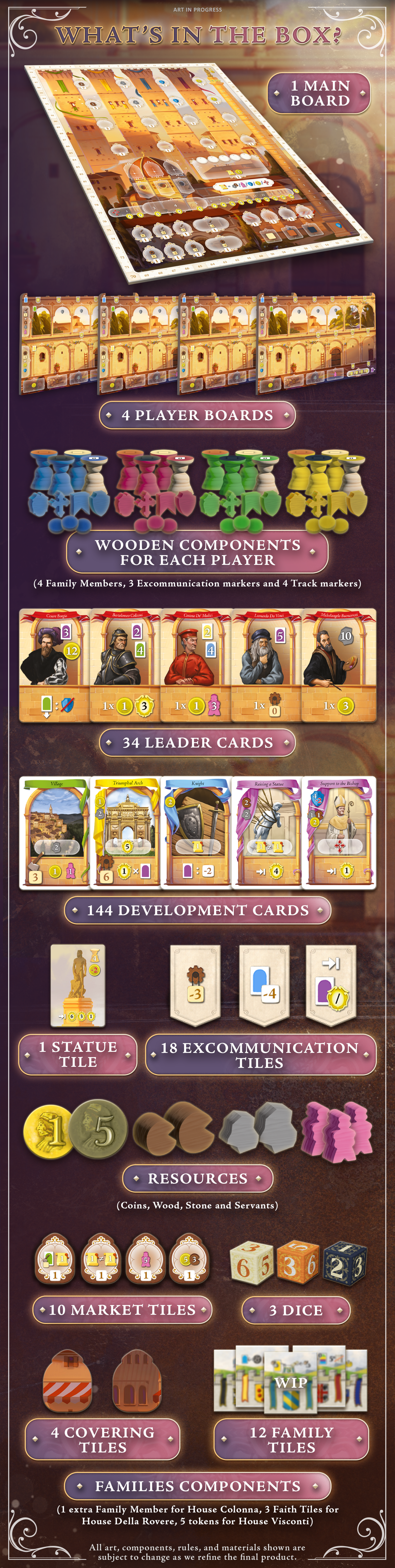
Maiestas - What's in the box
Maiestas - New rules and features
1. Development Cards and Deck Preparation
In Prima Lux, using the base game rules, there are 96 Development Cards divided into four types: Territories, Buildings, Characters, and Ventures, across three Ages.
Each combination of Age and card type contains 8 cards, and all of them are used during the game.
With the addition of Families of the Renaissance and The Pazzi Conspiracy, the number of available Development Cards increases considerably. At the same time, however, the larger card pool can make the game more unpredictable and create increasingly complex interactions, including direct player interactions that were not particularly appreciated by some players.
In Maiestas, the Development Card pool grows to 144 cards, with 12 cards of each type in every Age.
During setup, 8 of the 12 available cards are randomly selected for each Age and card type. The remaining 4 are excluded from the game.
This creates 12 groups of 8 cards. Each game still uses 96 Development Cards in total, while 48 remain outside the game.
The number of cards available during the game therefore remains the same, but their composition changes from one game to another.
You can no longer assume that a particular card will be present in every game.
The entire Development Card set has also been reworked. Some cards have been rebalanced, some have been selected from the expansions, and others have been created specifically for Maiestas.
The new set was designed as a single, cohesive collection, bringing together feedback from many players with our own observations after numerous games of Prima Lux.
The aim is to provide a wider variety of choices while maintaining a solid balance between the different strategies.
2. The Market
In Prima Lux, the Market consists of four fixed Action Spaces, each providing the same benefit throughout the game.
In Maiestas, the Market is made up of 10 tiles, each offering a different bonus.
At the beginning of each round, 4 tiles are drawn to create that round’s Market. Their bonuses provide resources and opportunities connected to other actions in the game.
3. Harvest, Production, and Access to the Towers
Maiestas also revisits the availability of some Action Spaces, with adjustments based on the number of players.
Harvest and Production
In two-player games, Harvest and Production are no longer blocked after the first placement.
Both actions have four zones:
• First zone: no penalty.
• Second zone: −2 to the action value.
• Third zone: −3.
• Fourth zone: −4, with no limit to the number of placements.
The availability of these zones changes according to the number of players.
In four-player games, the second zone is blocked.
In three-player games, the third zone is blocked.
This means that in a two-player game, it is still possible to choose Harvest or Production after your opponent has occupied the first space, as long as you are willing to accept the corresponding penalty.
This creates a Market that changes throughout the game, giving players new opportunities to evaluate from one round to the next.
At the end of each round, the four tiles are discarded and replaced. When the Market tile deck runs out, it is shuffled and used again.
The result is a Market that is no longer the same from game to game or even from round to round.
Access to the Towers
The cost of accessing the Towers also changes according to the number of players:
• 2 players: 4 Coins.
• 3 players: 3 Coins.
• 4 players: 2 Coins.
Compared to Prima Lux, this makes access to the Towers slightly easier in four-player games and more demanding in two-player games.
4. Leaders
Leaders have also gone through a process of selection and rebalancing.
Maiestas features a set of 34 Leaders, drawn from Prima Lux and the expansions and revised to create a balanced collection that works alongside the new Development Cards.
But we also wanted Leaders to play a greater role throughout the game.
For this reason, Maiestas introduces effects that allow players to draw additional Leaders beyond the four available at the beginning of the game.
This gives players more opportunities to choose which Leaders to pursue and creates new combinations and strategic possibilities.
5. End-Game Scoring
Maiestas also introduces new end-game bonuses designed to reward specific strategies.
The number of Buildings in your domain can provide an additional bonus:
• 5 Buildings: 5 Victory Points.
• 6 Buildings: 10 Victory Points.
Leaders
Leaders also contribute to the final score.
Additional bonuses are awarded to players who finish the game with 3, 4, 5, or more Leaders in play.
These rewards make investing in Leaders more meaningful, including during the later stages of the game.
From Prima Lux to Maiestas
Taken together, these changes show how Maiestas builds on the foundation of Prima Lux while giving the game a different rhythm from one playthrough to the next.
The Development Card pool is larger, but each game uses only part of it. The Market changes from round to round. Action Spaces have been adjusted according to player count. Leaders have a greater presence throughout the game, and new end-game bonuses give players additional reasons to pursue different strategies.
None of these changes are intended to replace the experience of Lorenzo il Magnifico. They are part of our effort to explore what that experience can become after years of playing, testing, listening to the community, and developing new content.
Maiestas is the result of that process: a new take on Lorenzo il Magnifico that keeps its familiar foundations while giving each game more room to surprise you.
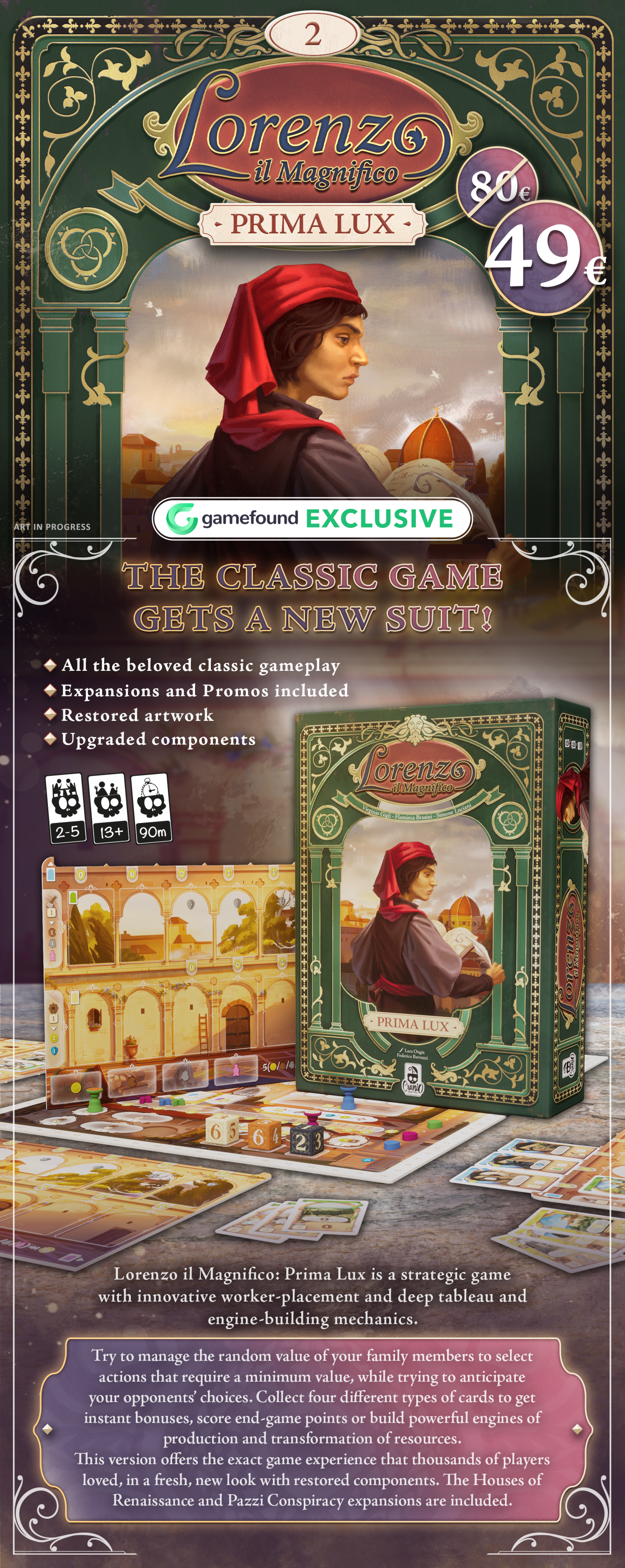
Lorenzo il Magnifico - Prima Lux
Prima Lux - What's in the box
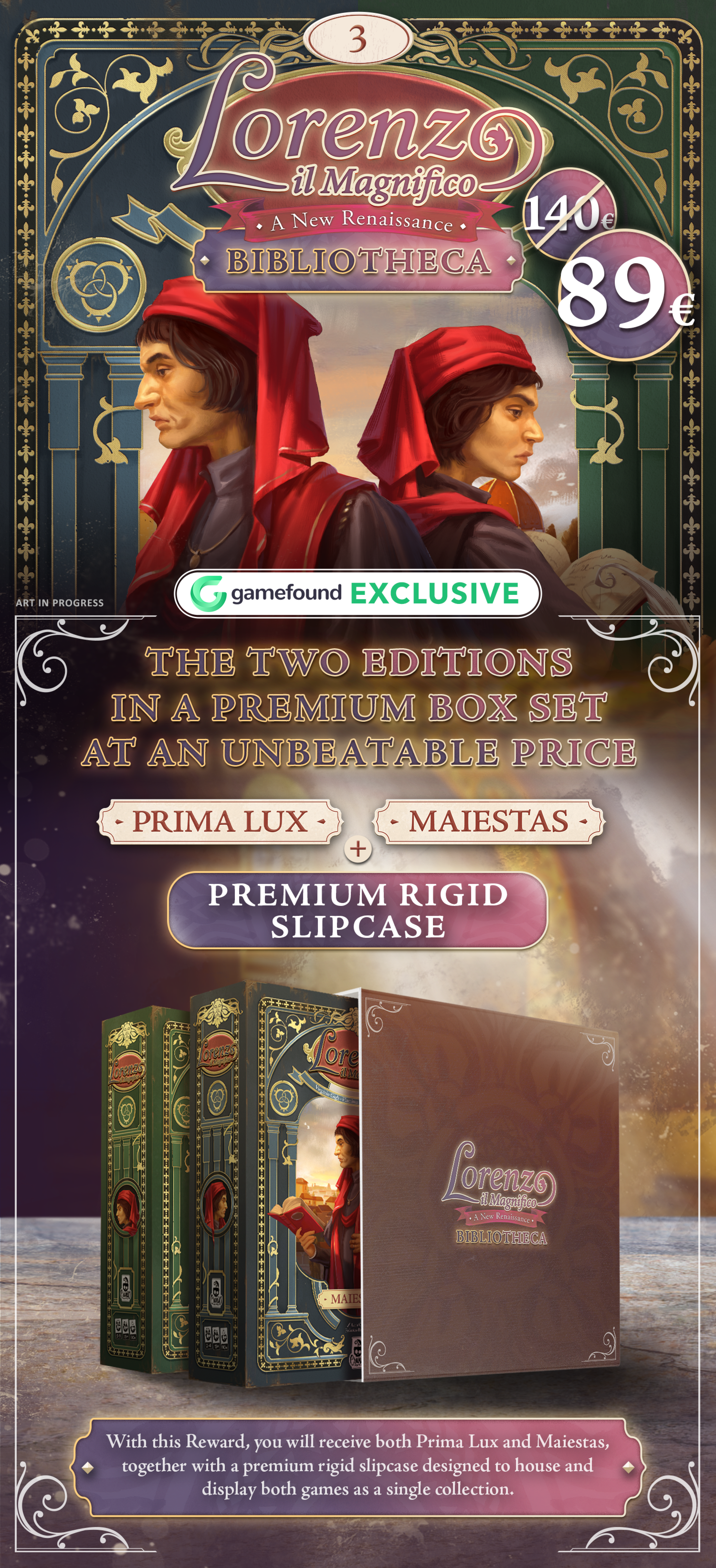
Lorenzo il Magnifico - Bibliotheca
Lorenzo il Magnifico - Gloria
Video and reviews
A fresh look, a familiar game
We approached this work with two things in mind: bringing the world of the game to life in a more immersive way, and making sure that the artwork always serves the gameplay.
From the main board to the individual cards, these principles guided our choices.
The Main Board
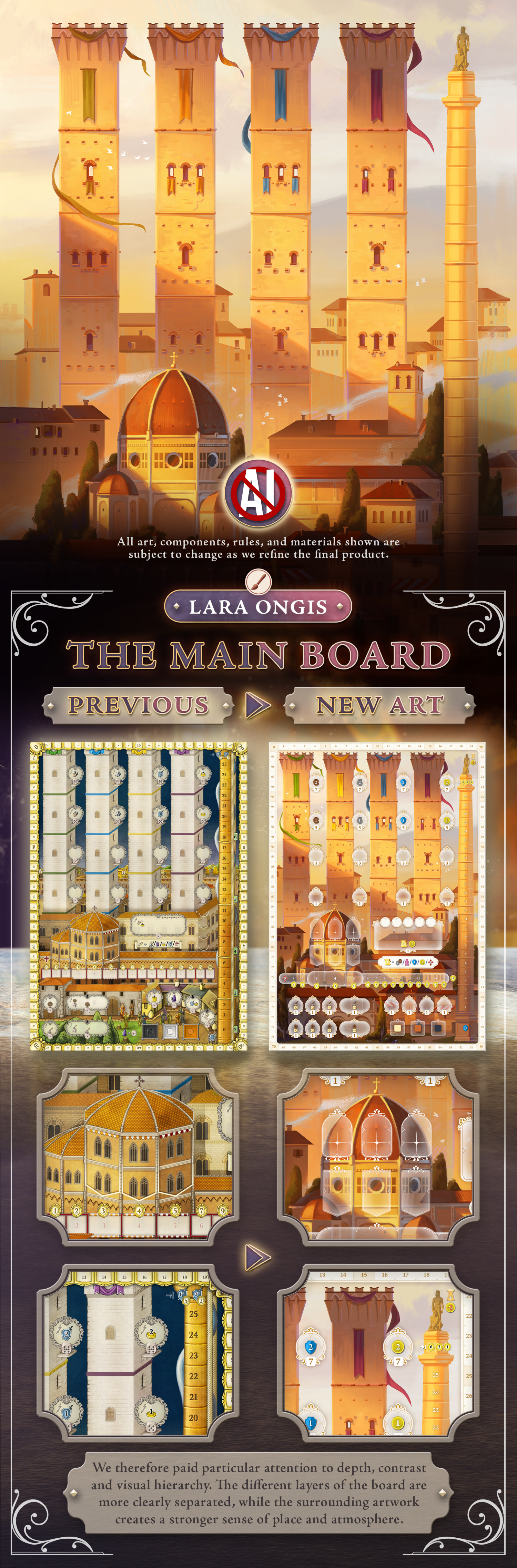
The main board was one of the first elements we looked at when developing the new visual direction.
The original board has a very distinctive and recognizable structure, and preserving it was essential to us. At the same time, we wanted to make the world of Lorenzo il Magnifico feel more cohesive and immersive, bringing the different areas of the board together within a more unified setting.
We therefore paid particular attention to depth, contrast and visual hierarchy. The different layers of the board are more clearly separated, while the surrounding artwork creates a stronger sense of place and atmosphere.
We also reduced some secondary visual elements, allowing the areas and elements that are most important during the game to stand out more clearly.
Most importantly, the artwork was designed around the gameplay, rather than simply placed on top of it. The visual elements help define the different areas of the board while keeping the information players need easy to identify at a glance.
The result is a board that feels richer and more immersive, while remaining clear and readable during play.
Development Cards
We followed the same philosophy when working on the cards.
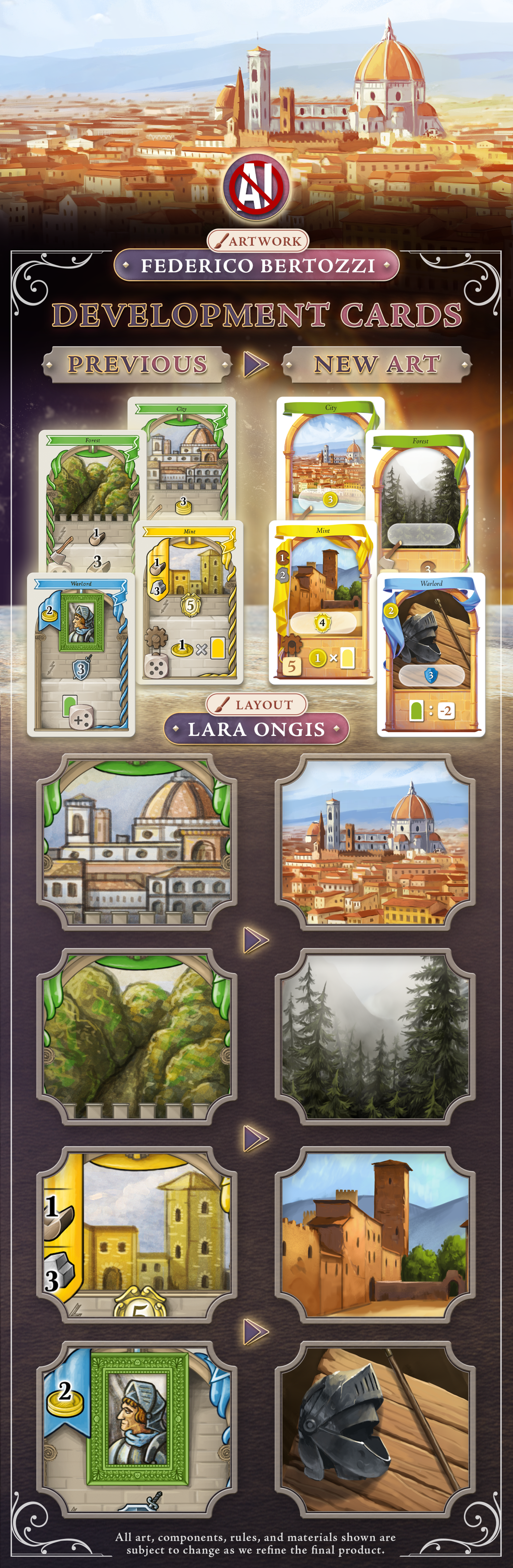
The overall structure remains familiar, but the visual treatment has evolved. We wanted to give the illustrations more room to breathe, while keeping the information and layout players are used to.
For the new illustrations, we chose a more atmospheric and naturalistic approach, with greater attention to depth, light and perspective.
At the same time, we worked to keep the compositions focused, so that the main subject of each illustration remains immediately recognizable.
This is particularly visible when comparing the original and new artwork side by side: the new illustrations aim to create a stronger sense of place and atmosphere, while still fitting naturally within the familiar structure of the cards.
Game Icons
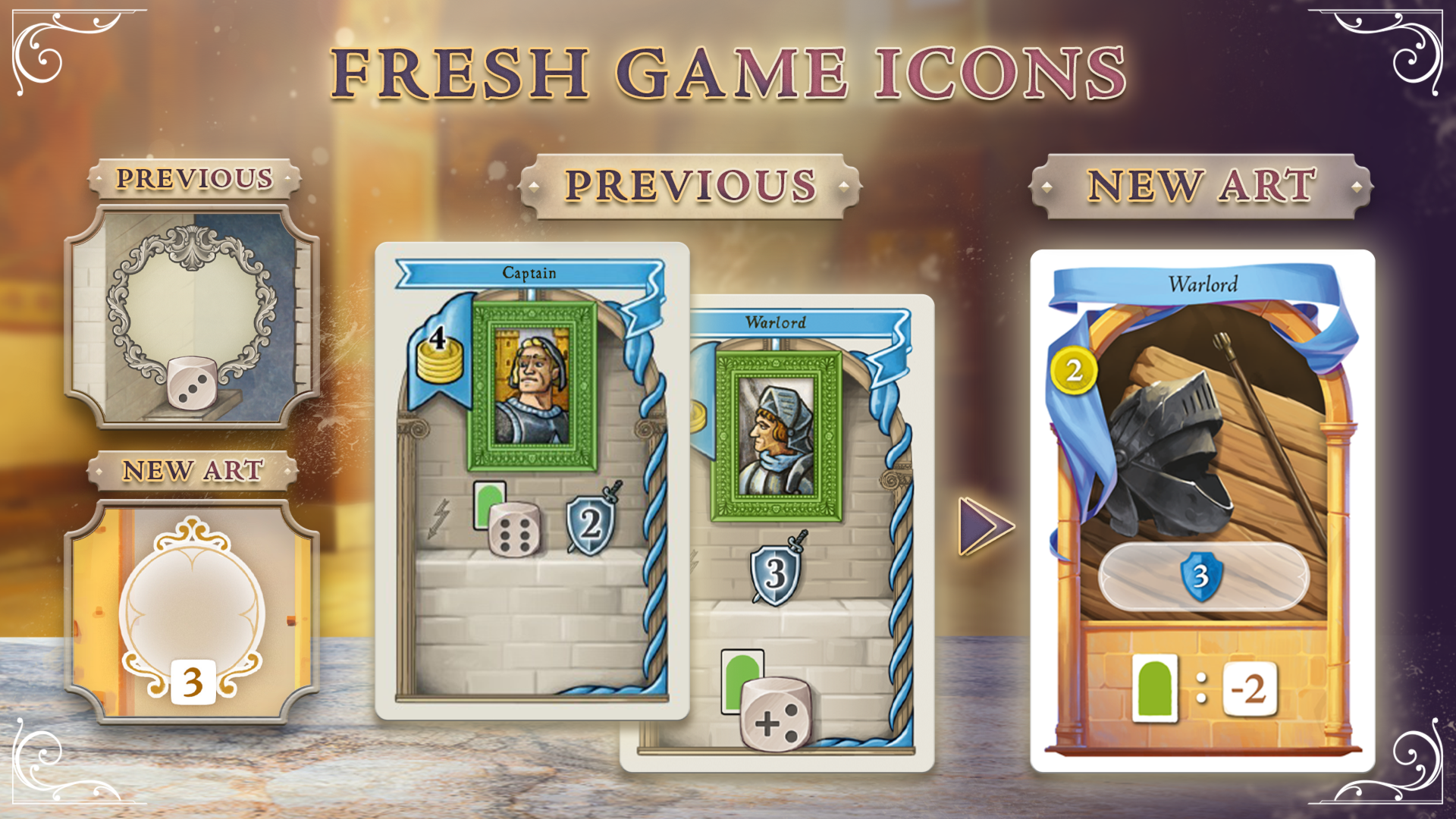
The visual refresh also extends to the game icons.
While these may be small elements, they play an important role in making the game easy to read at a glance. We therefore reworked their visual language not only to make them consistent with the new art direction, but also to improve clarity during play. One simple example is the use of numbers instead of dots, making quantities immediately easier to read.
We also revisited the visual syntax used throughout the iconography, making small but meaningful changes to the way different elements are combined and presented.
For example, in the original game, two very similar icons could represent significantly different effects. In one case, the icon meant that each time you bought a green card, you received a +2 bonus to the value of the Family Member you used. In another, it meant that you could immediately buy a green card as if you had placed a Family Member with a value of 6.
We have now differentiated the iconography of these two effects, making the distinction much clearer and reducing the possibility of confusion during play.
The goal was to keep the icons familiar in function while making them clearer, more consistent and quicker to understand during play.
Wooden Pieces
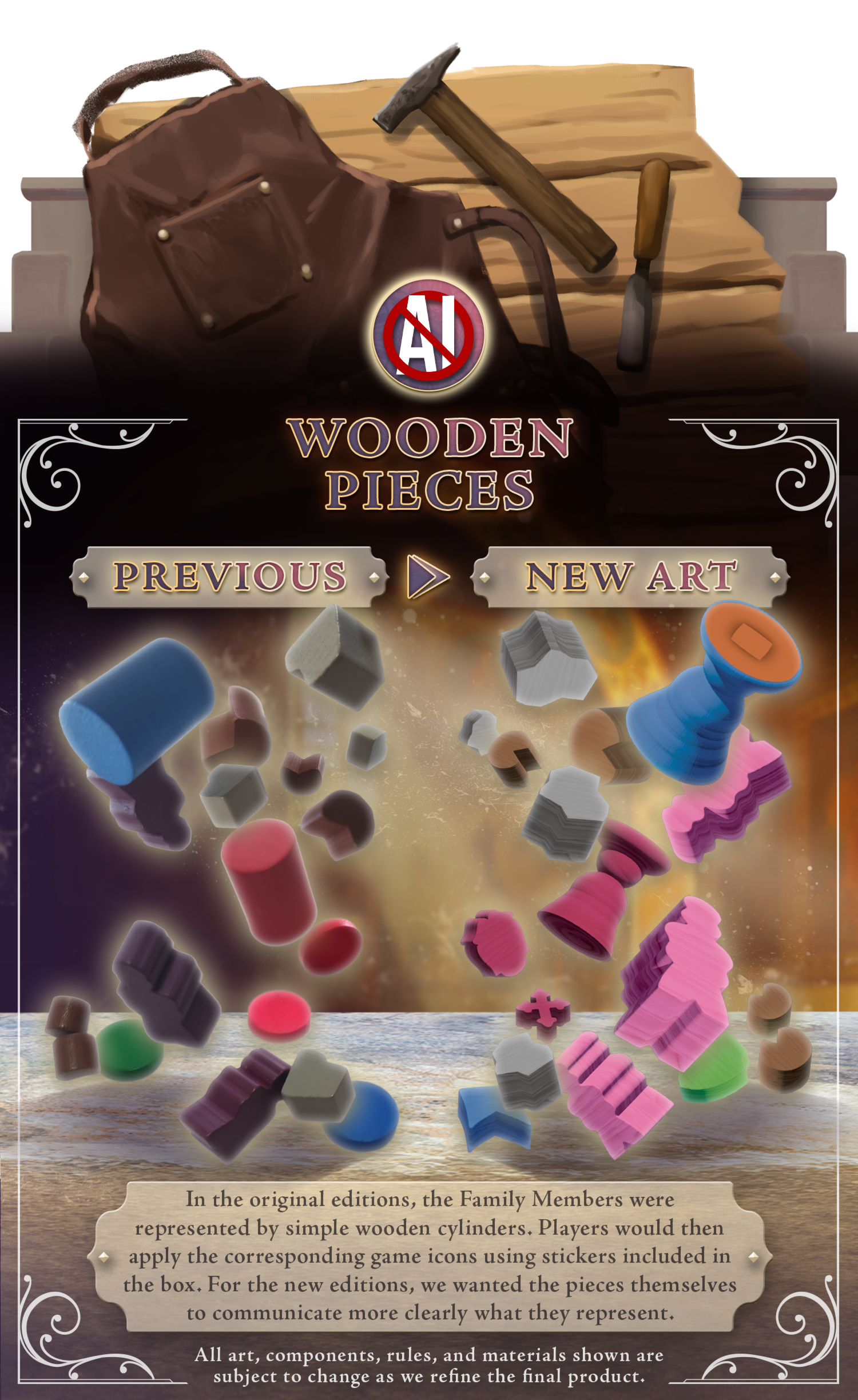
In the original editions, the Family Members were represented by simple wooden cylinders. Players would then apply the corresponding game icons using stickers included in the box.
For the new editions, we wanted the pieces themselves to communicate more clearly what they represent.
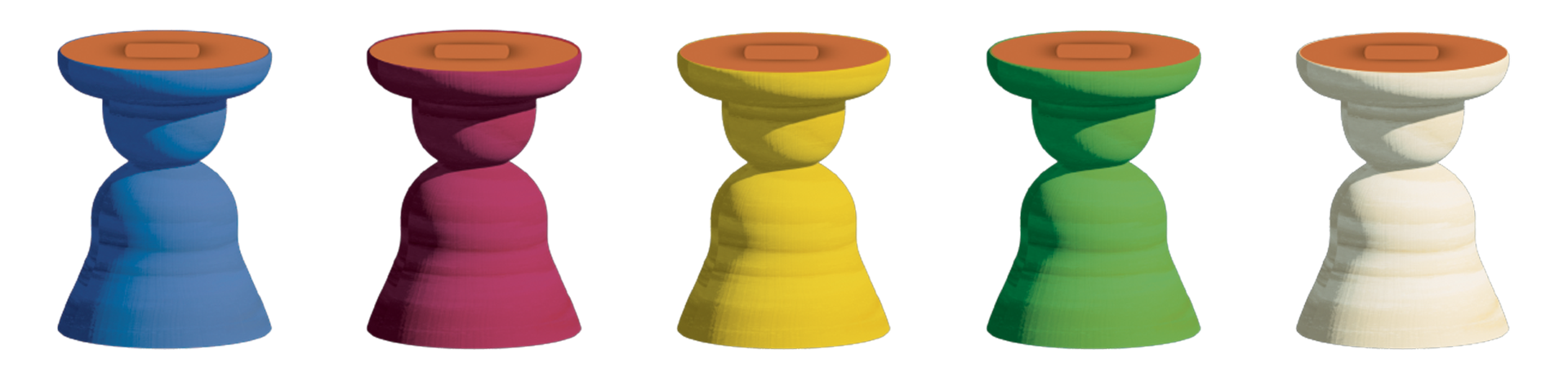
The Family Members now have a human silhouette, making them immediately recognizable on the board and reinforcing their connection to the people and characters at the heart of the game.
We have also moved away from stickers: the game icons are now printed directly onto the wooden pieces during production. This gives the components a cleaner and more finished appearance, while also making the icons more durable and easier to identify during play.
We also revisited the markers used on the different tracks.
Previously, these markers were all represented by identical wooden discs. While functional, this meant that their shape did not provide any information about which track they belonged to.
In the new editions, each marker has its own shape, inspired by the corresponding track.
This is a small change, but one that we feel makes a meaningful difference. The markers are now easier to distinguish at a glance, and their shapes help reinforce the visual identity of the different areas of the game.
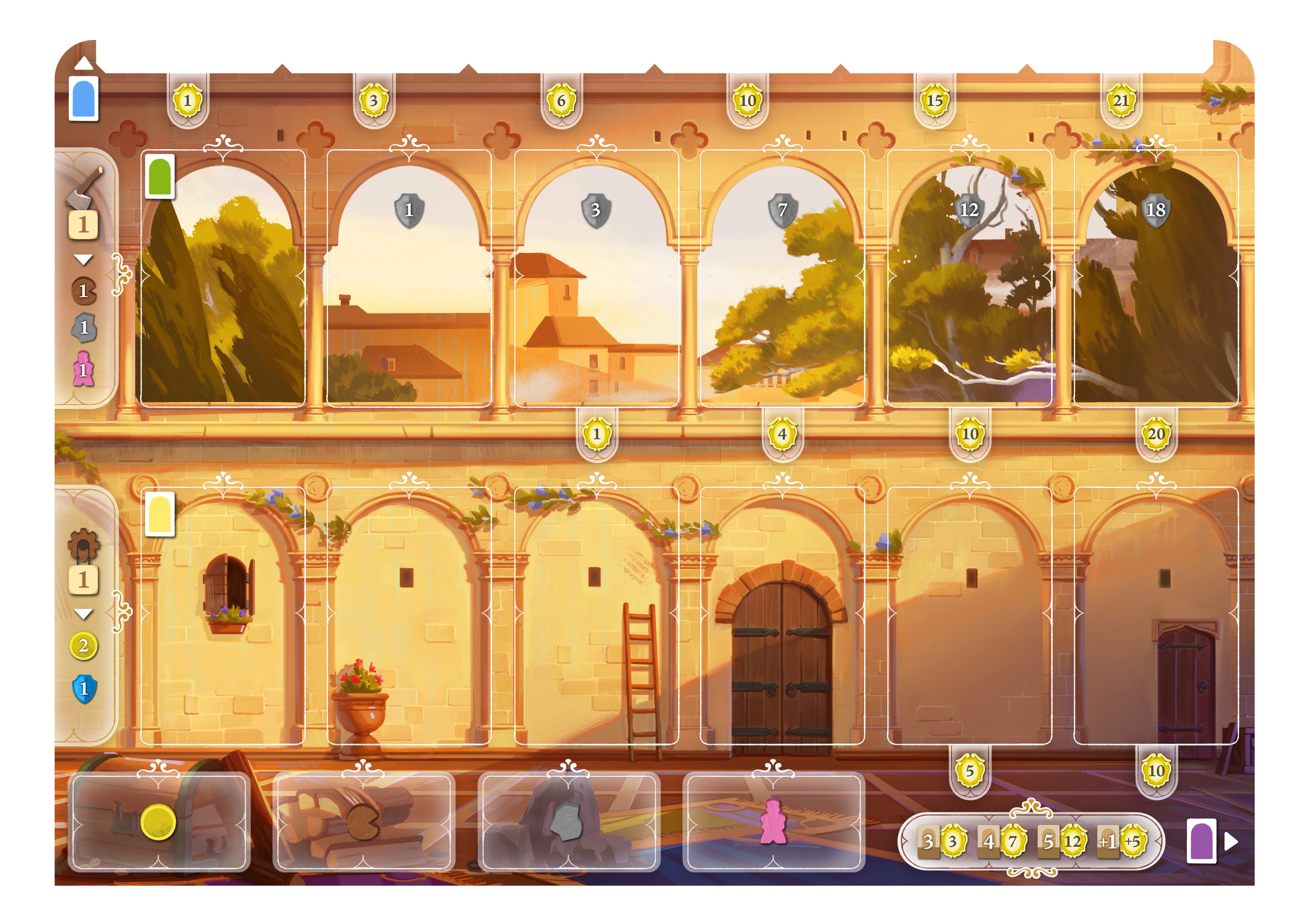
The Player Board
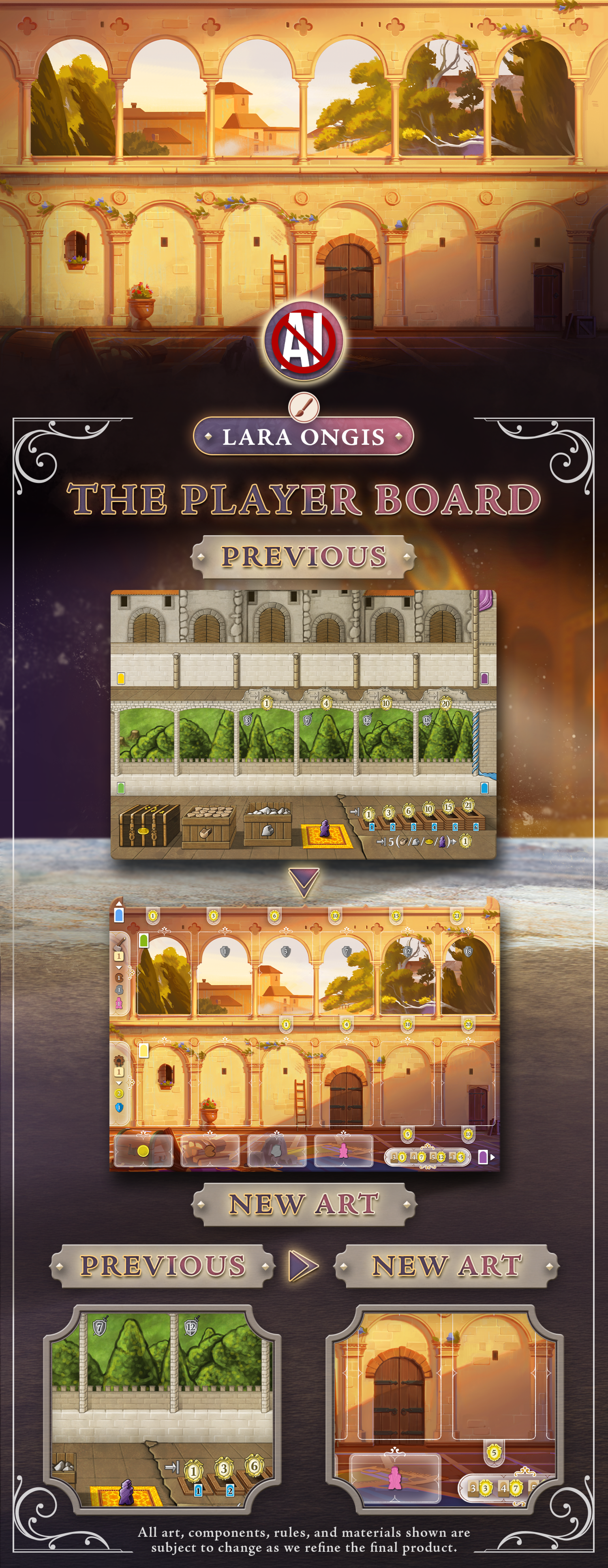
The same principles guided the redesign of the player board.
In the original version, the player board provided dedicated spaces for two categories of cards: Territory cards and Building cards. Character cards and Deed cards were instead placed beside the board, without a specific area.
For the new editions, we wanted to give all four categories a more clearly defined place, while also making some of the information associated with those cards easier to read during the game.
One of the most significant changes concerns the Character cards.
These cards are now placed in a dedicated area along the top of the player board. This area does more than simply provide a place to store the cards: it creates a direct visual connection between the cards and the Victory Points they can provide.
The Deed cards have also been given a dedicated space, this time to the right of the player board.
Here, Deed cards can be overlapped while leaving their individual Victory Point value visible. This makes it possible to keep the area compact without losing track of the points provided by each card.
Finally, The new Player Boards now integrate the information regarding the basic Production and Work bonuses directly onto the board itself. In the previous version, these bonuses were instead shown on separate tiles that had to be placed alongside the board.
In addition, the different values that define the asymmetry of the boards are now handled through double-sided boards: each board features two different configurations, one on each side. In the previous version, the board was single-sided, and its asymmetry was determined by the additional components.
As with the main board, the visual treatment of the player board follows the same new art direction. The different areas are integrated into a cohesive setting, with depth, contrast and visual hierarchy helping to distinguish the spaces while keeping the information players need easy to find.
The result is a player area that feels more complete and organized, while also making information that previously required calculation or interpretation more immediate and accessible.
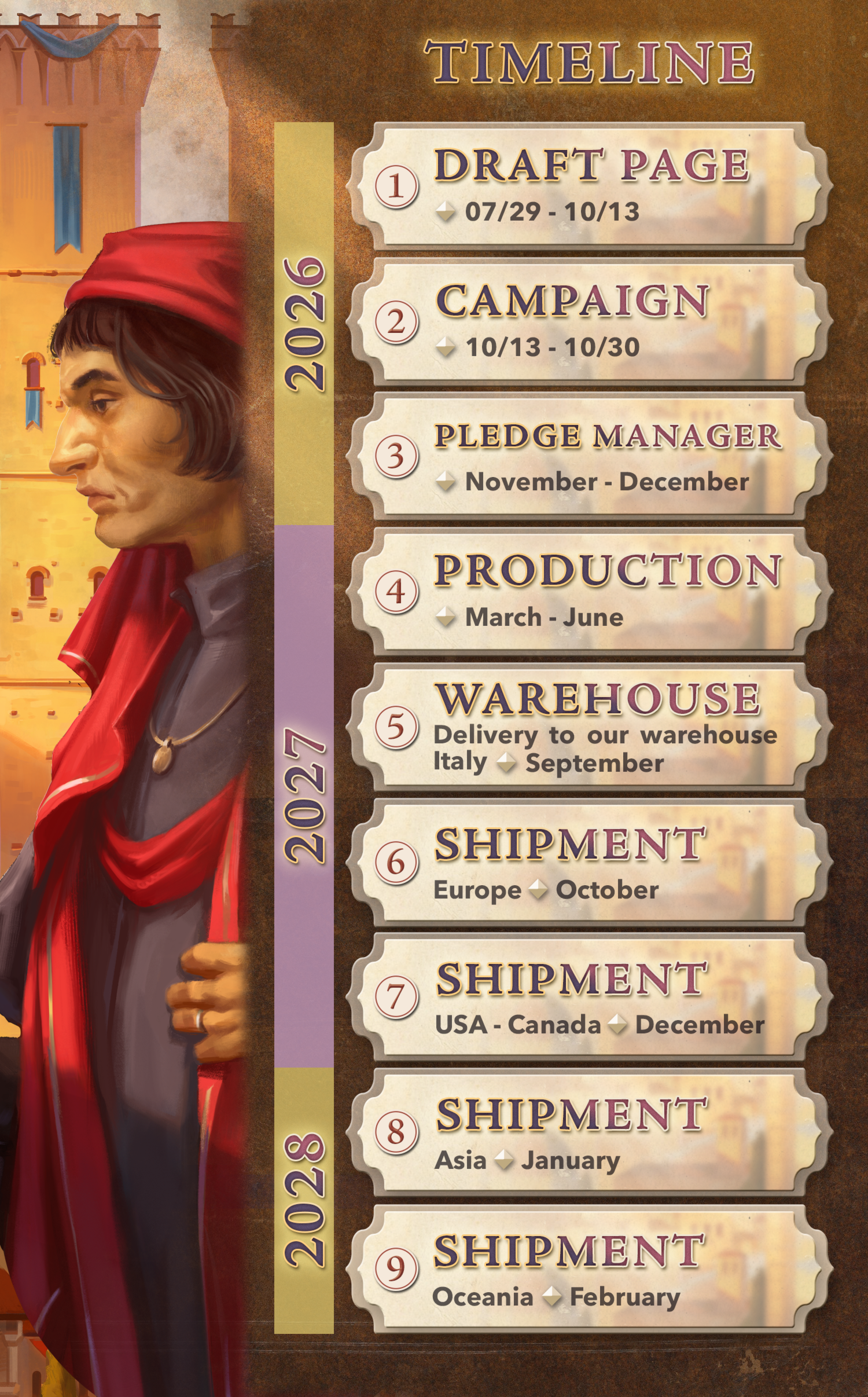
Timeline infographic
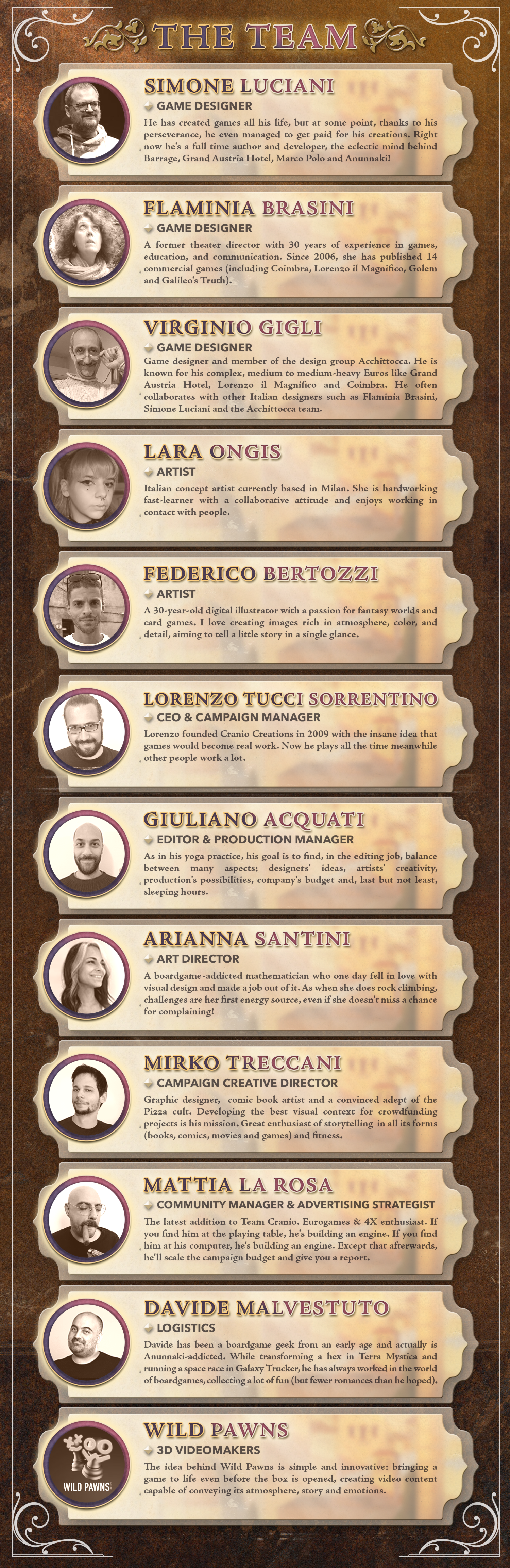
The Team




Commentaires (0)
Connecte-toi pour commenter ou répondre.
Pas encore de commentaire. Lance la discussion.