
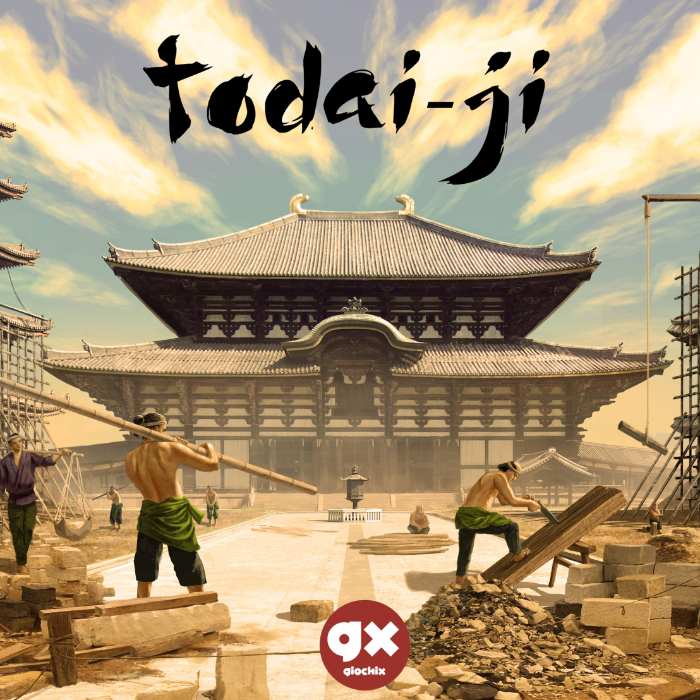
Todai-ji
Par giochix
Statut actuel
À venir
En bref · fiche BoardGameGeek traduite
En 710, l'empereur Shōmu ordonna la construction du Tōdai-ji à Nara, un projet colossal qui allait changer à jamais le visage du Japon. Pour ériger le plus grand temple en bois du monde et couler le Grand Bouddha en bronze, d’énormes quantités de bois, de métal et de main-d’œuvre furent mobilisées, plongeant l’empire dans une crise économique sans précédent. En tant que maîtres d’œuvre, vous devrez vous procurer les ressources nécessaires, gérer au mieux le gaspillage et l’endettement, et faire face à la pression du temps et des clans rivaux. Parviendrez-vous à achever ce temple grandiose et à inscrire votre nom dans l’histoire ? —description du concepteur
Présentation de la campagne
Introduction
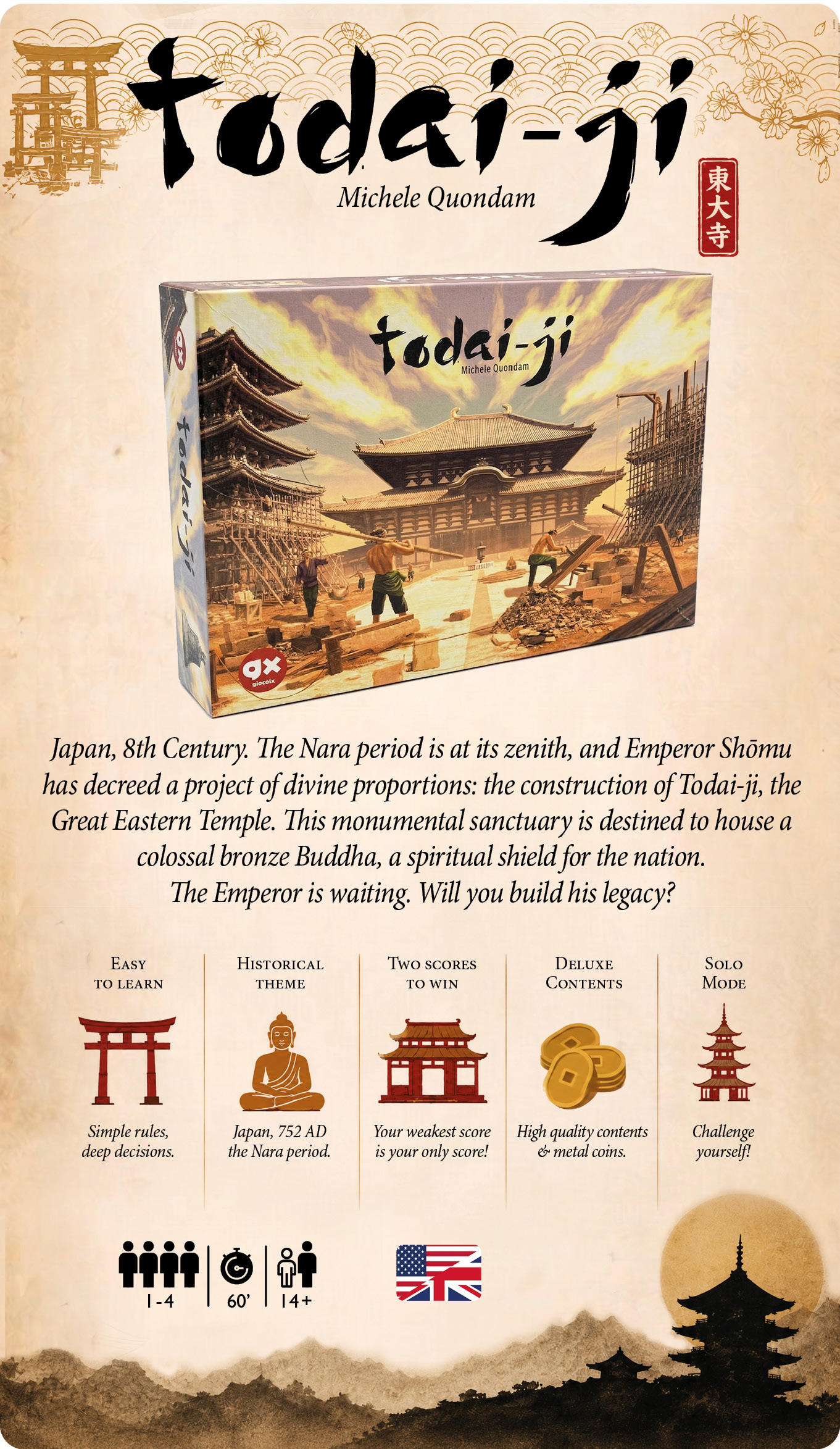
Japan, 8th Century. The Nara period is at its zenith, and Emperor Shōmu has decreed a project of divine proportions: the construction of Todai-ji, the Great Eastern Temple. This monumental sanctuary is destined to house a colossal bronze Buddha, a spiritual shield for the nation.
However, such divine ambition comes at a staggering earthly cost. The sheer volume of copper, charcoal, and timber required has pushed Japan to the brink of economic collapse. The imperial coffers are draining, and the weight of the construction is fracturing the stability of the land.
To save the project and the economy, the Emperor has dispatched groups of dedicated monks to every corner of the archipelago. As leaders of these groups, players must travel to the domains of powerful Daimyos, appealing to their faith and their wealth.
You are not merely builders; you are diplomats and spiritual fundraisers. You must coordinate the collection of wood and bronze, recruit skilled artists, and manage the delicate flow of Wadōkaichin (Wado) coins.
But the shadow of the Imperial Clan looms large. Representing the state's military might, the Clan is tired of diplomacy. If the monks fail to gather resources efficiently, the Clan will intervene, seizing materials by force through raids. In this struggle between faith and finance, you must balance your architectural legacy with your treasury: if the Clan surpasses the players in influence, the mission is a failure for all!
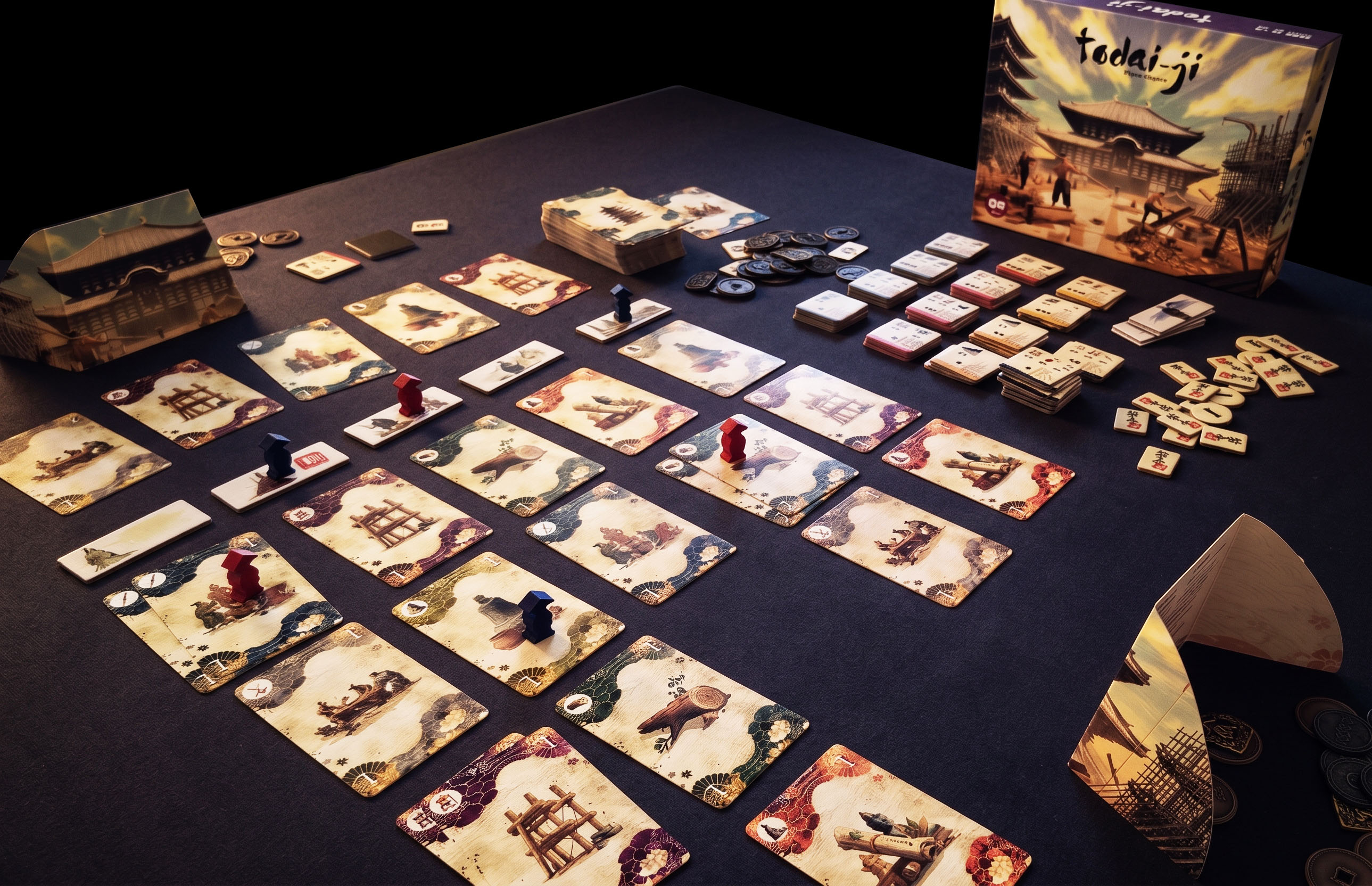
Todai-ji is a game of elegant tension set against the grandeur of ancient Japan. Has been designed by Michele Quondam and works for 1-4 players. Each player guides a community of monks among the feudal lords of ancient Japan — the Daimyo — negotiating donations that are coaxed, earned, and sometimes outmaneuvered.
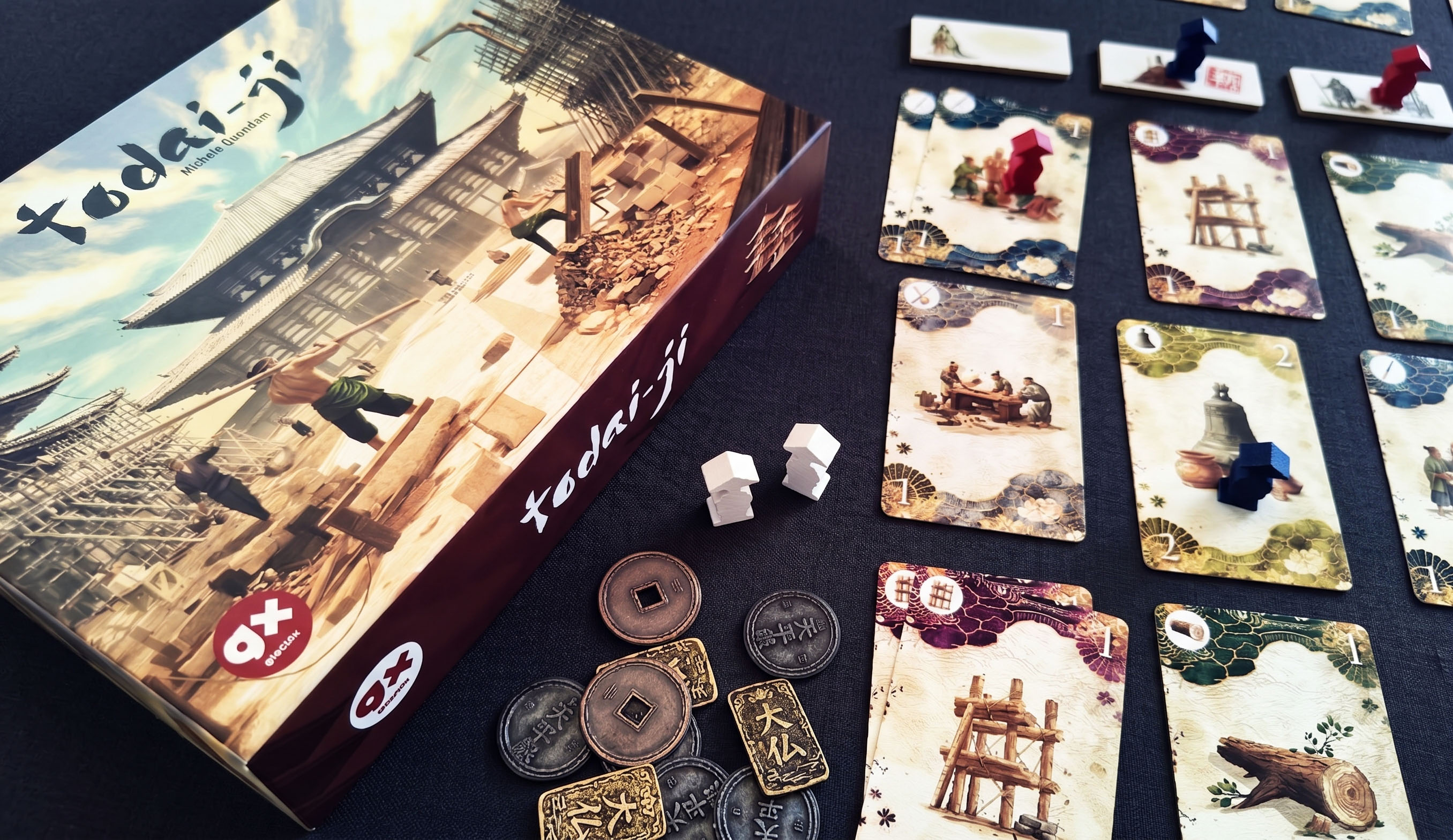
Coins — the Wadō, Japan's first official currency — flow between lords, monks, and the imperial army. You begin with just 6 Wadō. Longer columns yield more; clever bidding preserves them.
Balancing coin and stone, faith and politics, Todai-ji asks one timeless question: how much will you sacrifice to build something that endures?
Why follow?
- Simple Rules, Deep Decisions. The core loop is easy to grasp. Mastering the wrap-around movement, the bust limit, and the prayer timing is another matter entirely.
- Epic Historical Theme. Japan, 752 AD. The construction of Tōdai-ji was one of the most ambitious undertakings of the ancient world — and the tension between spiritual devotion and economic reality is at the heart of every decision you make.
- Two Scores, One Winner. Your final score is the lower of your Construction Points and your Wadō. Architecture without wealth, or wealth without architecture, both lead to defeat.
- Compact & Portable. A deep strategy game in a small box. Everything you need, nothing you don't.
- The Perfect Balance. 1–4 players, 60 minutes. Enough tension to keep you thinking, short enough to play again.
- Deep & Engaging. Meeple placement, timing, resource management, secret bidding — every turn asks something different of you.
- Solo Mode Included. Face the Imperial Clan alone. A dedicated solo experience that tests your efficiency without compromise.
- The Shared Economy of Wadō. Coins flow between monks, lords, and the imperial army. Longer columns yield more; clever bidding preserves them. Every Wadō spent is a calculation.
- A Competitive Game with a Twist. The Imperial Clan is not just a threat — it is a rival player. If it outscores everyone, all players lose together.
Images (1 · BoardGameGeek)
▶ Vidéos (0)
Pas encore de vidéo pour ce jeu.
Commentaires (0)
Connecte-toi pour commenter ou répondre.
Pas encore de commentaire. Lance la discussion.