MyNextPledge
← Retour au catalogue

Total Command: 1991

Par Total Command Games

Être prévenu du lancement

BoardGameGeek

Statut actuel

À venir
Bluff Contrôle de territoire Economie Gestion Guerre Jeu de dés

Signaler une version française

Tu as vu qu'il y aura une VF (FAQ, page de pledge, actu de l'éditeur…) ? Le drapeau s'affiche tout de suite ; un admin vérifie ensuite ta source.

Connecte-toi pour signaler une VF.

Signaler un problème

Description, vidéo, lien boutique… Une raison aide, mais ce n'est pas obligatoire.

Connecte-toi pour signaler un problème sur cette fiche.

En bref · fiche BoardGameGeek traduite

Total Command : 1991 est un jeu de société de stratégie géopolitique et de guerre moderne se déroulant dans une réalité alternative où la Guerre froide dégénère en un conflit mondial à grande échelle. Les joueurs prennent les commandes de l’une des quatre factions asymétriques : l’OTAN, le Pacte eurasien ou l’AFME (Coalition Afrique-Moyen-Orient) ; chacune disposant de sa propre identité stratégique, de ses ressources et de son positionnement stratégique. Un rôle optionnel de « nation rebelle » introduit une dimension asymétrique au jeu, axée sur le sabotage, la tromperie et la perturbation. Il s’agit d’une expérience très interactive et de longue durée, alliant stratégie globale, gestion économique et combat tactique. Le jeu se déroule selon un cycle annuel structuré comprenant la planification, des tours d’action, les recettes et les événements. Les joueurs doivent gérer une économie dynamique reposant sur le pétrole, l’acier et la production industrielle, tout en coordonnant des opérations multidomaines sur les théâtres d’opérations terrestres, aériens et navals. Le combat utilise un système basé sur les dés (2D10) influencé par le terrain, la composition des unités et la structure de commandement, qui récompense le positionnement et la planification à long terme. Les mécanismes de base mettent l’accent sur le contrôle de zone, la gestion des ressources, la construction de « moteurs de jeu », les informations cachées et la négociation entre joueurs, créant ainsi une tension constante et une profondeur stratégique. Les unités représentent des forces militaires modernes telles que des divisions blindées, des escadrons aériens, des flottes navales et des forces spéciales, soutenues par des infrastructures comme des usines, des raffineries, des aérodromes et des ports. Des mécanismes supplémentaires incluent une économie mondiale fluctuante, la progression de la recherche et de la technologie, ainsi que des règles avancées optionnelles pour les alliances et une stratégie élargie, ce qui augmente la rejouabilité et la variété stratégique. Les joueurs peuvent remporter la victoire grâce à plusieurs conditions : atteindre un objectif de points de victoire, obtenir le « Total Command », lancer une frappe nucléaire décisive sur une capitale ennemie ou enregistrer le moins de pertes possibles à la fin de la partie. Alliant des éléments de jeu 4X, une simulation de jeu de guerre et une forte interaction entre les joueurs, Total Command : 1991 offre une expérience stratégique profonde et rejouable où chaque décision influence l’issue de la guerre. 🌍 Contexte de l’escalade de la Guerre froide : le monde se divise en trois grandes puissances : OTAN → Une puissance blindée et navale supérieure, dotée d’infrastructures technologiques de pointe Pacte eurasien → La plus grande masse continentale, misant sur une infanterie moins coûteuse et un développement nucléaire à faible coût Coalition AFME → Le plus grand producteur de pétrole du conflit, avec les coûts de production globaux les plus bas Un système optionnel de « nation rebelle » introduit des perturbations asymétriques via des jokers, des sabotages et le détournement de ressources, afin qu’aucune superpuissance ne parvienne à remporter une victoire totale ⚙️ Systèmes de base (jeu de guerre de grande stratégie) Le gameplay s’articule autour d’un macro-cycle annuel comprenant : Phases de planification stratégique Exécution d’actions en plusieurs tours Revenus de ressources et évolutions du marché mondial Événements mondiaux dynamiques Les mécanismes de base incluent : Guerre de contrôle de zone Une économie de développement de capacités La gestion de la rareté des ressources Des systèmes de renseignement cachés La diplomatie entre joueurs ⚔️ Système de combat (résolution 2D10) Le combat utilise un système 2D10 basé sur les dés, influencé par : Du terrain et des avantages géographiques De la composition des unités et de la synergie interarmes De l’efficacité de la hiérarchie de commandement Cela crée un système où la probabilité est déterminée par la préparation stratégique plutôt que par le seul hasard. 🪖 Infrastructures militaires et industrielles Les joueurs commandent : Des forces blindées et d’infanterie Des forces aériennes Des flottes navales Des unités d’opérations spéciales Soutenus par des infrastructures telles que : Des usines industrielles Des raffineries de pétrole Des bases aériennes et des ports Des réseaux logistiques Cela crée une couche de simulation militaro-industrielle entièrement interconnectée. 📊 Économie et système de pression mondiale L’économie mondiale est régie par : Les chaînes d’approvisionnement en pétrole et en acier L’évolution de la production industrielle Les fluctuations du marché Le commerce et les enchères Les progrès technologiques permettent aux factions de faire évoluer leurs doctrines, de débloquer des améliorations et de modifier l’équilibre stratégique au fil du temps. 🏆 Conditions de victoire (plusieurs voies vers la victoire)Les joueurs peuvent remporter la victoire en : La domination de l’économie mondiale des points de victoire L’atteinte d’une domination stratégique totale via le « Total Command » L’élimination des capitales ennemies par une frappe nucléaire La survie avec le moins de pertes possibles en fin de partie Chaque voie offre une identité stratégique distincte et favorise la rejouabilité. 🔥 Identité fondamentale du jeu « Total Command : 1991 » offre : Un gameplay de grande stratégie 4X approfondi Une simulation de guerre moderne ultra-réaliste Une boucle de commandement tripartite Des manœuvres de diversion magistrales Chaque décision donne naissance à un conflit mondial unique, façonné par les alliances, les trahisons et le contrôle des ressources.

Présentation de la campagne
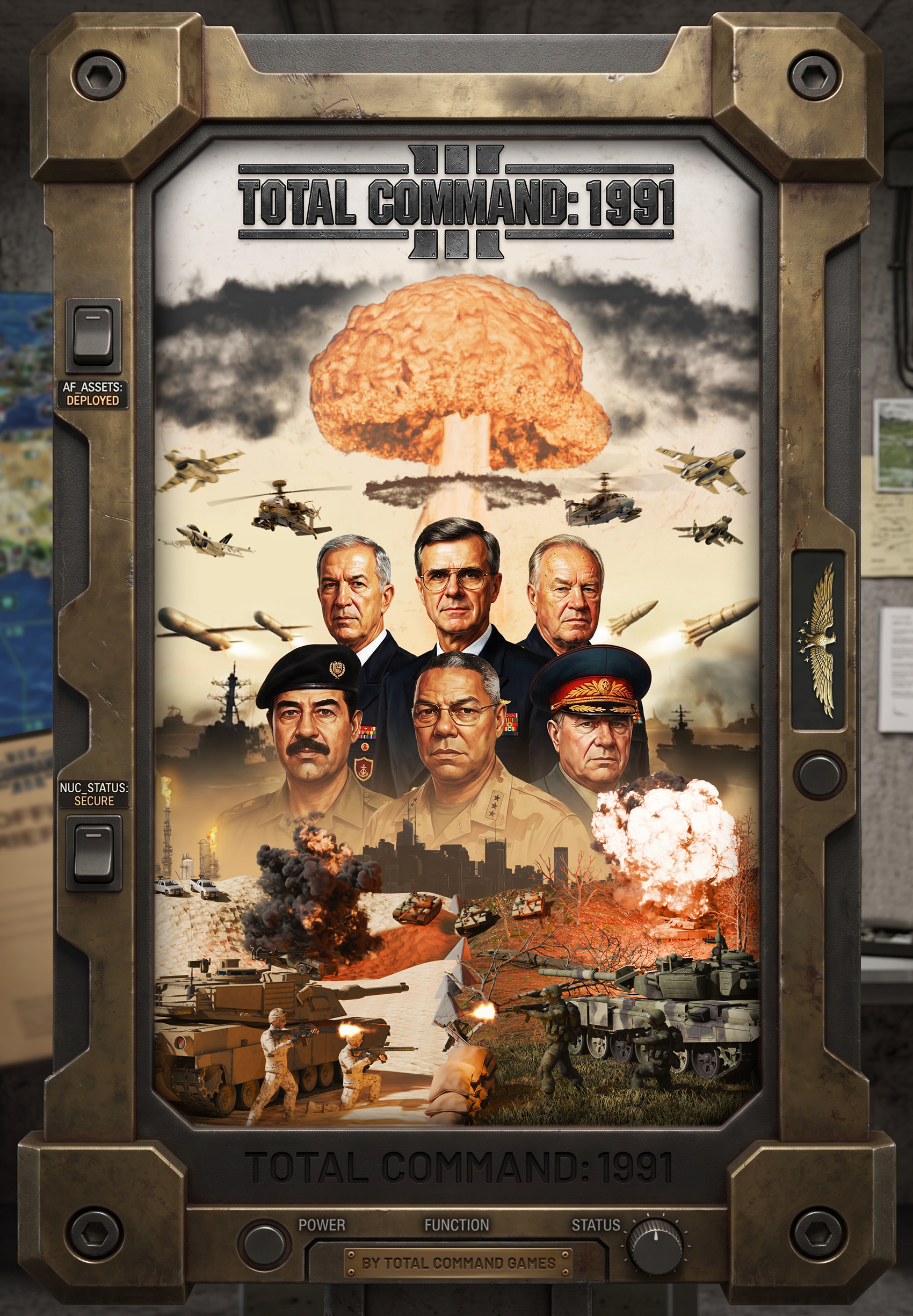

THE WORLD STANDS ON THE EDGE OF TOTAL WAR!

In Total Command: 1991, the Cold War never ended quietly. Instead, rising tensions, collapsing alliances, resource crises, and military escalation have pushed the world into a full-scale global conflict. Nations mobilize. Fleets move into contested waters. Air wings scramble. Armies cross borders. Behind the scenes, covert networks, rogue operatives, and political pressure reshape the battlefield before the first shot is even fired.

You are not simply commanding units.
You are leading an entire military, economic, and political machine.

Every decision matters. Every resource has value. Every front can collapse if ignored. Victory will not come from a single battle, but from long-term planning, calculated risk, diplomacy, deception, and total command of the battlefield.

Prepare your strategy. Dominate the battlefield. Control your resources.


Total Command: 1991 is a massive-scale grand strategy wargame set in an alternate 1990s timeline where global conflict erupts between powerful asymmetric factions.

Players command one of four asymmetric factions, NATO, the Eurasian Pact, and the AFME Coalition, each with its own strategic identity, military strengths, and distinct playstyle on the battlefield. An optional Rogue Nation player introduces hidden threats through wildcards, executing sabotage, infiltration, black-market operations, and unpredictable asymmetric warfare.


Grand strategy → manage global positioning, long-term plans, alliances, and escalation.
Modern warfare → command land, air, and naval forces across multiple theaters of war.
Economic management → control credits, oil, steel, and industry points to sustain and expand your war effort.
Tactical combat → resolve battles using terrain, unit types, command structure, and dice-driven combat.
Diplomacy and deception → form temporary alliances, pressure rivals, and use decoy markers to mask movements and bait enemy resources.
Covert operations → deploy recon, intel systems, and sabotage missions to disrupt enemy strategy.

Total Command: 1991 is designed for players who love deep decision-making, high-stakes conflict, and cinematic campaign moments where the entire table feels like a living war room.


│ Beyond its scale as a grand strategy wargame, Total Command: 1991 is built around a massive 3.4m x 1.4m (4.76m²) world map board, designed to create one of the most ambitious tabletop war-room experiences ever produced.
│ The game will also officially attempt a Guinness World Records title for:
"The World's Largest Commercially Available Board Game".

╔═📜 𝚃𝚑𝚎 𝙻𝚘𝚛𝚎


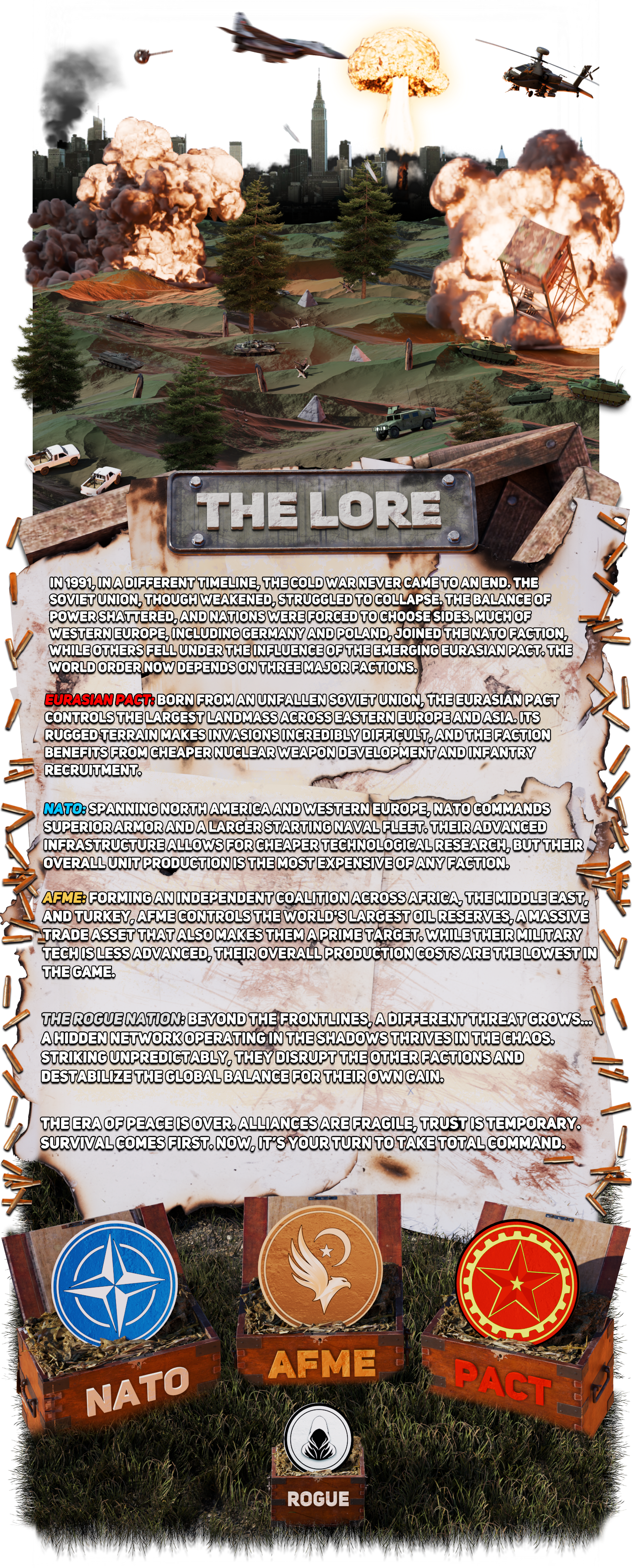
In 1991, in a different timeline, the Cold War never came to an end. The Soviet Union, though weakened, struggled to collapse. The balance of power shattered, and nations were forced to choose sides. Much of Western Europe, including Germany and Poland, joined the NATO faction, while others fell under the influence of the emerging Eurasian Pact. The world order now depends on three major factions.

  • Eurasian Pact Formed from a Soviet Union that never fell, the Eurasian Pact stretches across Eastern Europe and the vast expanse of Asia, controlling the largest landmass of any faction. Its territories feature difficult terrain to traverse, making invasions challenging, they can develop nuclear weapons at a lower cost, and recruiting infantry units is cheaper.

  • NATO Across the West, NATO spans North America, and Western Europe. NATO has superior armor and naval power, along with a larger starting naval inventory, and its infrastructure allows certain technological upgrades to be researched at a lower cost than rival factions, though production is more costly compared to others.

  • AFME A coalition of African and Middle Eastern nations came together to form AFME, choosing independence from the other superpowers. Turkey also decided to join, boosting their influence. With control over key oil-producing regions, they became the largest oil producer in the conflict, a position that can be used for trade, or exploited by others looking to take it. While their units are less technologically advanced, their production capabilities come at a lower cost than rival factions.

  • The Rogue Nation Beyond the frontlines, a different threat grows… A hidden network operating in the shadows thrives in the chaos. Striking unpredictably, they disrupt the other factions and destabilize the global balance for their own gain.

╠═🗺️ 𝚃𝚑𝚎 𝙼𝚊𝚙
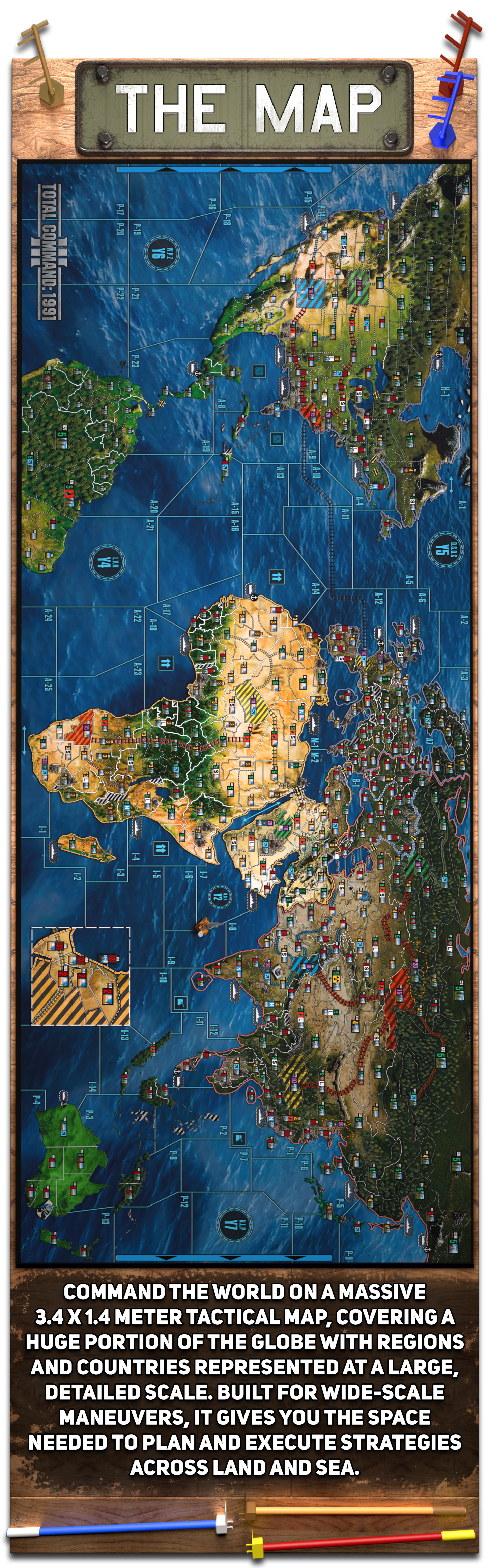

Command the world on a massive 3.4 x 1.4 meter (4.76 m²) tactical map, covering a huge portion of the globe with regions and countries represented at a large, detailed scale. Built for wide-scale maneuvers, it gives you the space needed to plan and execute strategies across land and sea.

╠═🎖️ 𝙲𝚑𝚊𝚒𝚗 𝚘𝚏 𝙲𝚘𝚖𝚖𝚊𝚗𝚍


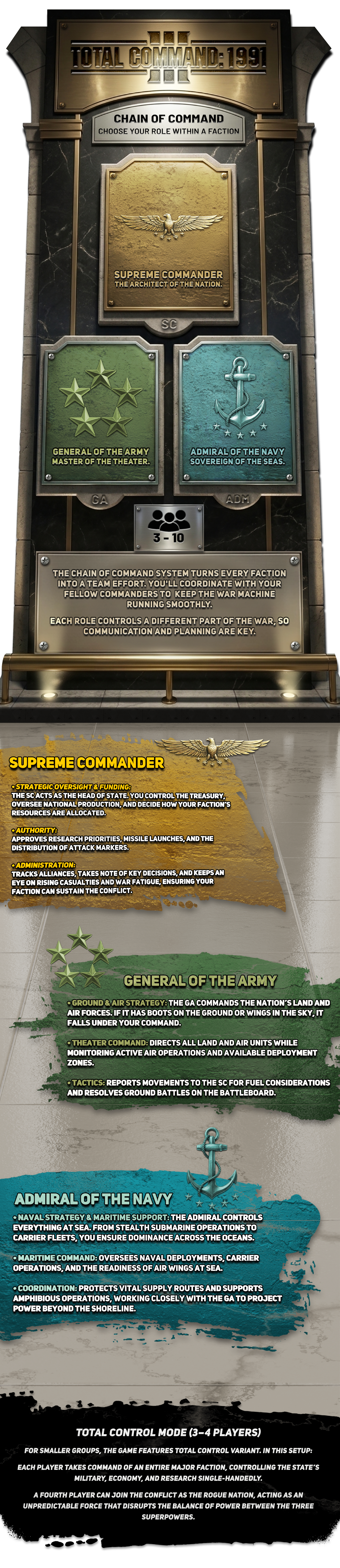
The Chain of Command system turns each Faction into a coordinated team effort, where players must communicate and plan together to keep the war machine running. Each role controls a different part of the war, making coordination essential.

👑 Supreme Commander (SC) Acts as the Head of State, overseeing the economy, resource allocation, and key strategic decisions like research priorities and missile launches, while keeping track of alliances and rising war fatigue.

🪖 General of the Army (GA) Leads all land and air forces, directing troop movements, managing active deployments, and resolving ground battles while coordinating closely with the SC for logistics and fuel.

⚓ Admiral of the Navy (ADM) Controls naval operations, from submarines to carrier fleets, securing supply routes and supporting large-scale operations across the seas.

The game is designed for up to 10 players, with each faction run by a full command team. It can also be played with 3 players, where each controls an entire faction, with an optional 4th player joining as the Rogue Nation.

╠═📦 𝚃𝚑𝚎 𝙰𝚛𝚜𝚎𝚗𝚊𝚕

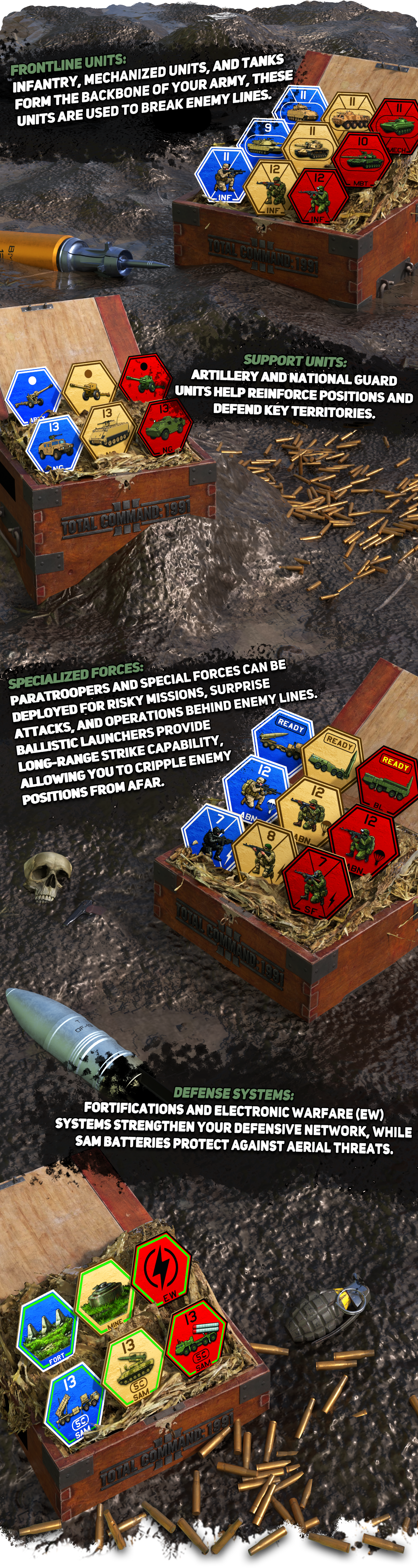
‎‎ ‎ ‎ ‎ ‎ ‎ ‎ ├🪖 ​𝘎𝘳𝘰𝘶𝘯𝘥 𝘍𝘰𝘳𝘤𝘦𝘴


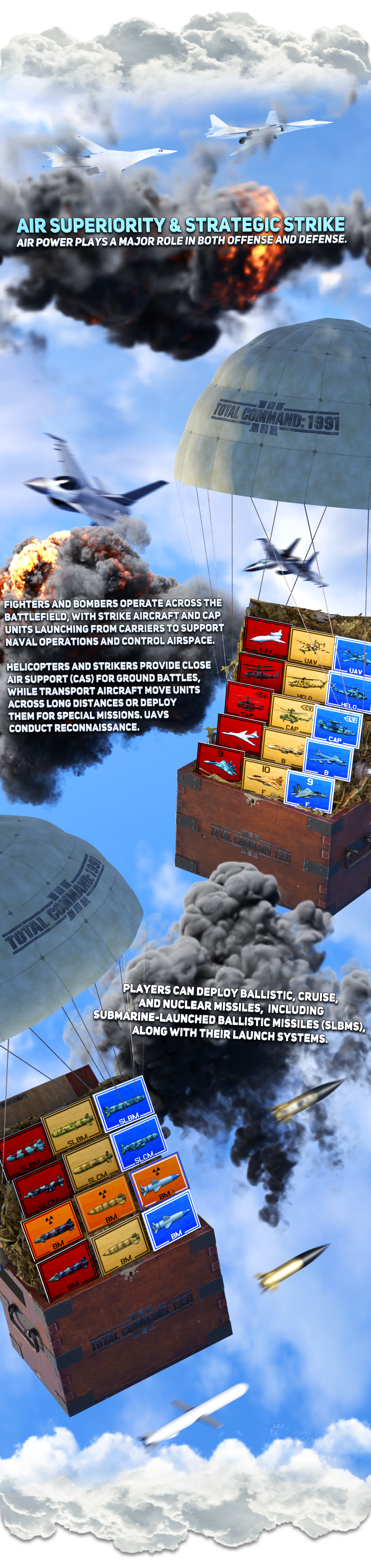
‎‎ ‎ ‎ ‎ ‎ ‎ ‎ ├✈️ 𝘈𝘪𝘳 𝘍𝘰𝘳𝘤𝘦𝘴

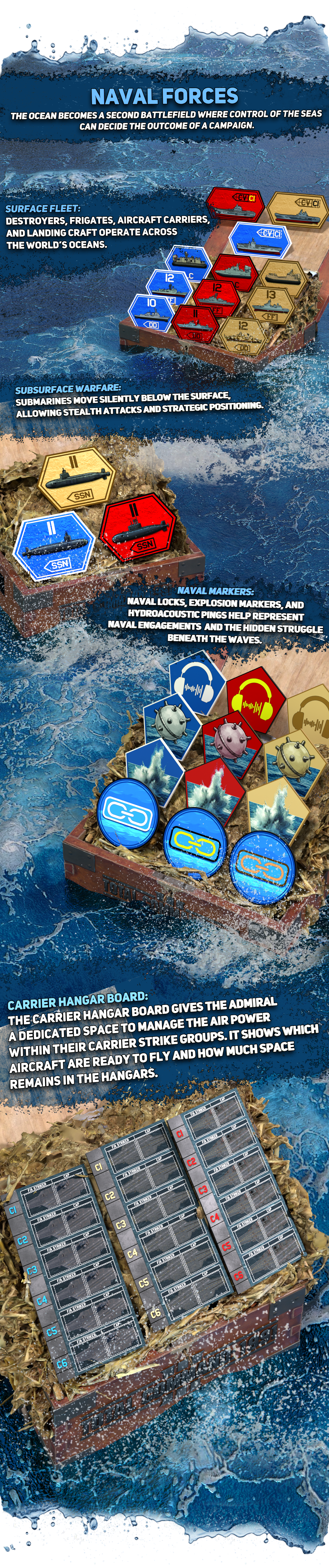
‎‎ ‎ ‎ ‎ ‎ ‎ ‎ └⚓ 𝘕𝘢𝘷𝘢𝘭 𝘍𝘰𝘳𝘤𝘦𝘴

╠═🗂️ 𝙲𝚊𝚛𝚍 𝙻𝚒𝚋𝚛𝚊𝚛𝚢


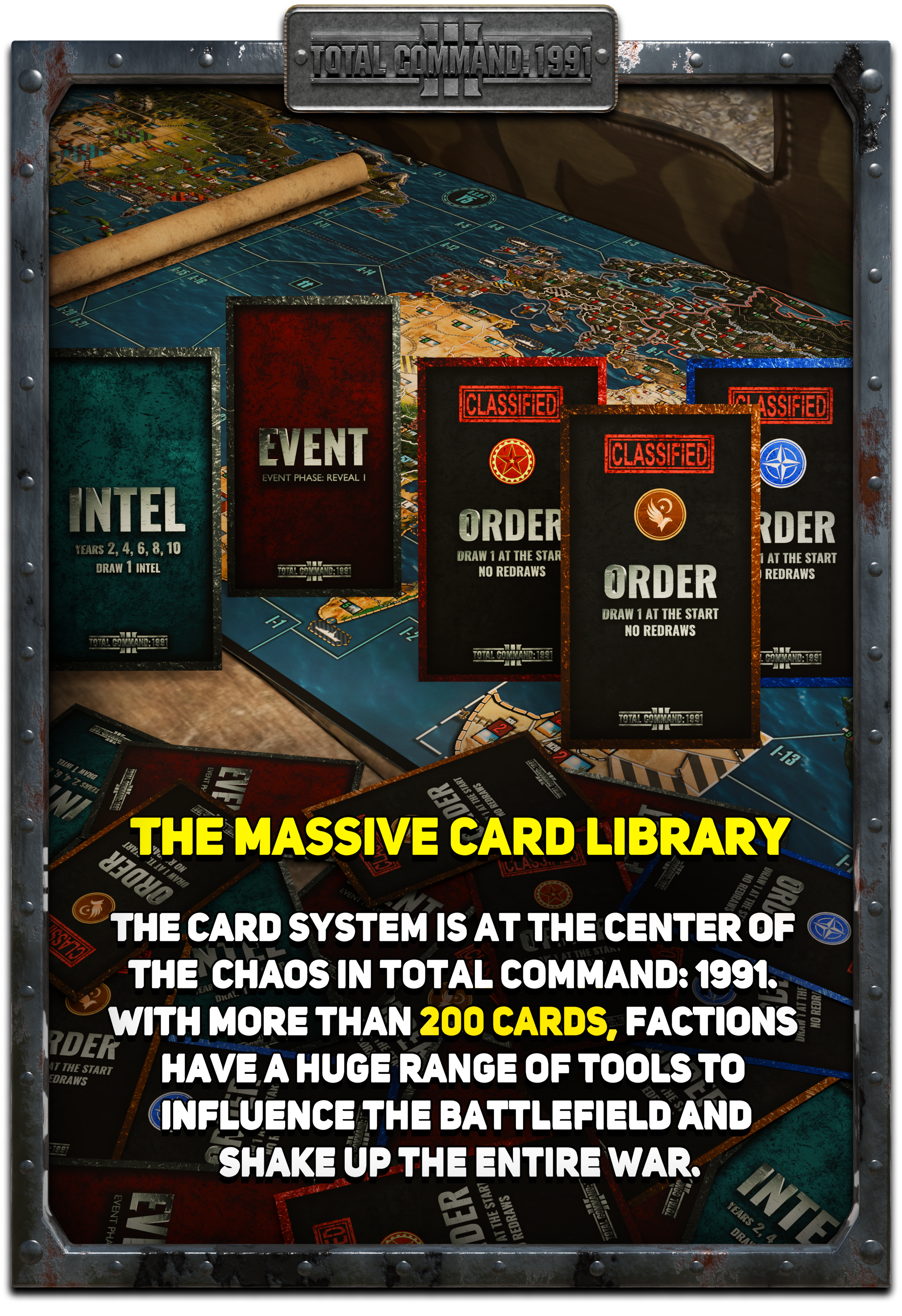
The card system is at the center of the chaos in Total Command: 1991.
With over 200 unique cards, factions have a vast range of tools to influence the battlefield and reshape the war.

‎‎ ‎ ‎ ‎ ‎ ‎ ‎ ├🌍 𝘌𝘷𝘦𝘯𝘵 𝘊𝘢𝘳𝘥𝘴

 
Sometimes the war changes in an instant. An economic crash, sudden weather shifts, or other global events can force everyone at the table to rethink their strategy. When an Event card appears, it affects all Factions. The battlefield changes, whether you're ready or not.

‎‎ ‎ ‎ ‎ ‎ ‎ ‎ ├🕵️ 𝘐𝘯𝘵𝘦𝘭 𝘊𝘢𝘳𝘥𝘴

 
Intel cards give you the edge when it matters most. Use them to boost your forces in a critical battle or disrupt an opponent right before their big move. But intelligence doesn’t last forever, if you hold onto it too long, the chance to use it disappears.

‎‎ ‎ ‎ ‎ ‎ ‎ ‎ ├🎯 𝘖𝘳𝘥𝘦𝘳 𝘊𝘢𝘳𝘥𝘴


Order cards are how you move toward victory. While the war unfolds, you’ll be pursuing secret objectives like capturing a key supply hub or controlling a strategic coastline. Completing these missions earns Victory Points, and those points are what decide who wins the war.

‎‎ ‎ ‎ ‎ ‎ ‎ ‎ ├⭐ 𝘊𝘰𝘮𝘮𝘢𝘯𝘥 𝘊𝘢𝘳𝘥𝘴


Turn the tide of battle by drafting historical Generals and Admirals to lead your forces. These Command Cards are drawn specifically by the General of the Army and Admiral of the Navy to provide the elite expertise needed to secure a win.

Each commander is based on a real-world figure, offering unique traits that can make attacks and defense more effective.

Command cards range from Common to Legendary. The higher the rarity, the more specialized traits and powerful modifiers they bring to the Battleboard.

Higher-tier leaders allow for larger unit stacks and more aggressive deployments, allowing you to push your faction's capabilities beyond standard limits.

‎‎ ‎ ‎ ‎ ‎ ‎ ‎ └🧨 𝘛𝘩𝘦 𝘙𝘰𝘨𝘶𝘦 𝘕𝘢𝘵𝘪𝘰𝘯


The Rogue Nation introduces an unpredictable element to the war. Instead of controlling a superpower, this player operates through a roster of operatives, including playable real-life figures like Osama, Kevin Mitnick, and Pablo Escobar, focusing on disruption rather than territorial control.

Your role isn’t to conquer the map, it’s to create chaos, sabotage the major factions, and slow their progress whenever possible.

The Rogue operates using Shadow Points (SP). Every Wildcard effect costs SP, so you must find ways to generate it, by blackmailing factions, converting stolen funds, or playing specific Wildcards that grant SP.

  • Unique Wildcard Decks Each operative comes with their own set of 10 Wildcards, giving access to 20 different effects. Because the cards are double-sided, you rotate them to use the effect that best fits the situation. With these cards, you can blackmail factions, bribe them, or offer services to turn blocs against each other.
  • Tailored Sabotage Each operative changes the way the Rogue Nation interferes with the game, shifting the faction's focus based on their unique specialization;


Focused on high-attrition warfare and asymmetric tactics. He can trigger insurgency attacks that sabotage regions, turning standard conflicts into grueling wars of attrition that bleed the major factions of resources.

A digital entity who does not utilize physical infiltration attacks. Instead, he focuses on the use of punishing Wildcards to disrupt economies and shatter command structures.

A stretch goal unlock. Specializes in high-risk coup attempt, targeting faction capitals and political centers while siphoning resources from rival factions.


The Objective: The Rogue Nation wins by disrupting everyone else. Break lines, interfere with intelligence, and keep the major powers off balance.

In Total Command: 1991, sometimes the most dangerous player is the one no one can fully control.

╠═⚙️ 𝚃𝚎𝚌𝚑 𝚁𝚊𝚌𝚎


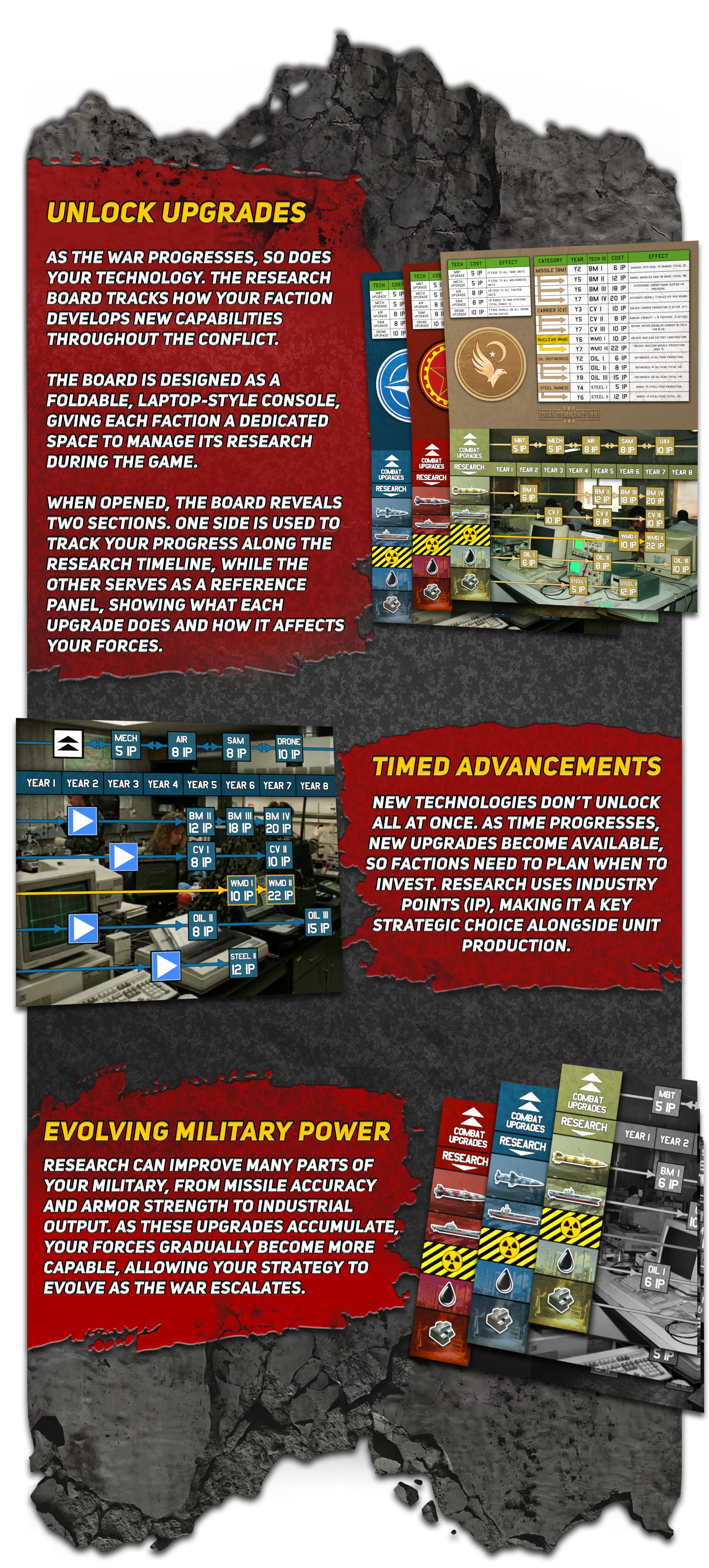
As the war progresses, so does your technology. The Research Board tracks how your faction develops new capabilities throughout the conflict.

The board is designed as a foldable, laptop-style console, giving each faction a dedicated space to manage its research during the game. When opened, the board reveals two sections.

One side is used to track your progress along the research timeline, while the other serves as a reference panel, showing what each upgrade does and how it affects your forces.

Timed Advancements: New technologies don’t appear all at once. Certain upgrades only become available as the timeline advances, encouraging players to plan ahead and decide when to invest in research. Technologies are unlocked using Industry Points (IP), making research another strategic choice alongside unit production.

Evolving Military Power: Research can improve many parts of your military, from missile accuracy and armor strength to industrial output.

As these upgrades accumulate, your forces gradually become more capable, allowing your strategy to evolve as the war escalates.

╠═⏱️ 𝚂𝚝𝚊𝚝𝚞𝚜 𝙱𝚘𝚊𝚛𝚍


The Status Board is the game’s central hub, keeping track of the timeline, global tension, and the race to victory.

Manages the 10-year countdown of the conflict.

A dry-erase scoring zone. While each faction tracks gains privately in their journal, official totals are audited and updated here annually. The first faction to reach 1000 VP claims an instant “Sudden Death” victory.

Tracks escalation from conventional to nuclear war. The marker flips from Green to Red the moment any player researches WMD technology, authorizing the use of atomic weapons.

A public tracker shows which Faction bloc is currently hosting the Rogue Nation’s HQ.

╠═💰 𝚃𝚑𝚎 𝙶𝚕𝚘𝚋𝚊𝚕 𝙴𝚌𝚘𝚗𝚘𝚖𝚢 𝙱𝚘𝚊𝚛𝚍


In Total Command: 1991, the economy is a decisive front. Use the Global Economy Board to Trade resources with rivals or to the World Bank. Secure assets through Auctions and take Loans when Credits are low. Standard factions trade openly, while the Rogue player utilizes the Rogue Network for illicit deals. Balance your Credits, Oil, IP, and Steel, without them, the war machine stops.

The global economy shifts each year based on a custom 1D6 Market Roll. Some years bring prosperity, while others push the world toward recession.

Because of this, timing matters. A well-timed sale can fund an entire military push, while a poorly timed one could leave you struggling to keep production running.

Sell excess Oil or Steel to the World Bank in exchange for Credits, or acquire Industry Points (IP) to expand your production capacity.

If the Bank’s price isn’t good enough, take your resources to the Auction House. Factions can start bidding wars over valuable materials. If another faction desperately needs IP, Steel or Oil, putting your stockpile up for auction can spark a tense negotiation across the table.

Sometimes war demands resources you don’t currently have. Factions can take Bank Loans to gain immediate funding, but borrowing comes with risks. Debt can quickly become a strategic burden if the war doesn’t go your way.


The Rogue player interacts with the economy very differently. Instead of relying on the official market, they convert stolen assets into Shadow Points (SP).

  • Money Laundering: Stolen wealth can be moved through underground channels to gain influence or converted back into Credits to fund operations.
  • Mercenary Contracts: The Rogue can also sell services to the major factions. Protection deals, intelligence support, and other shady arrangements can all be negotiated, for the right price.

╠═🏭 𝚃𝚊𝚌𝚝𝚒𝚌𝚊𝚕 𝚁𝚎𝚌𝚘𝚛𝚍 & 𝙸𝚗𝚍𝚞𝚜𝚝𝚛𝚒𝚊𝚕 𝙼𝚒𝚐𝚑𝚝

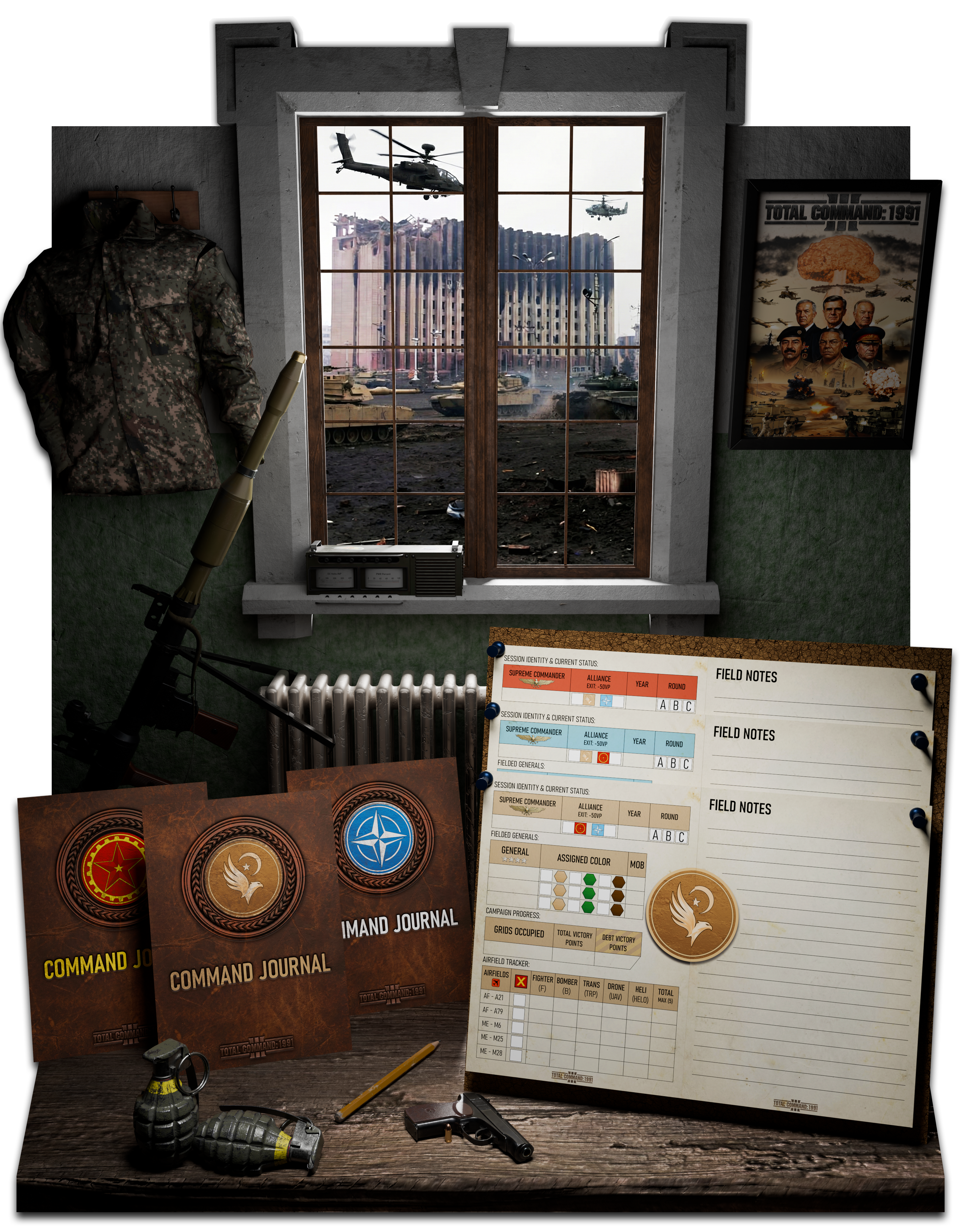
‎‎ ‎ ‎ ‎ ‎ ‎ ‎ ├📓 𝘛𝘩𝘦 𝘊𝘰𝘮𝘮𝘢𝘯𝘥 𝘑𝘰𝘶𝘳𝘯𝘢𝘭


This is your strategic nerve center. It’s where you handle the logistics of your command and the shifting politics of the theater.

Strategic Tracking Log your overall game progress, including Victory Points and occupied grids, while maintaining the official status of your Alliances.

General Tracking Each General drawn from the Command Card deck is assigned a color by you. Use that color to mark their units on the map, so it’s clear who commands what, and track how many units are currently under each General to ensure they stay within their mobilization limit.

Airfield Management Monitor all aircraft currently parked within your airfields. And track each airfield’s status, including whether it is operational or disabled.

Field Notes A dedicated space for plannings, tactical reminders, and calculating combat math for battles.

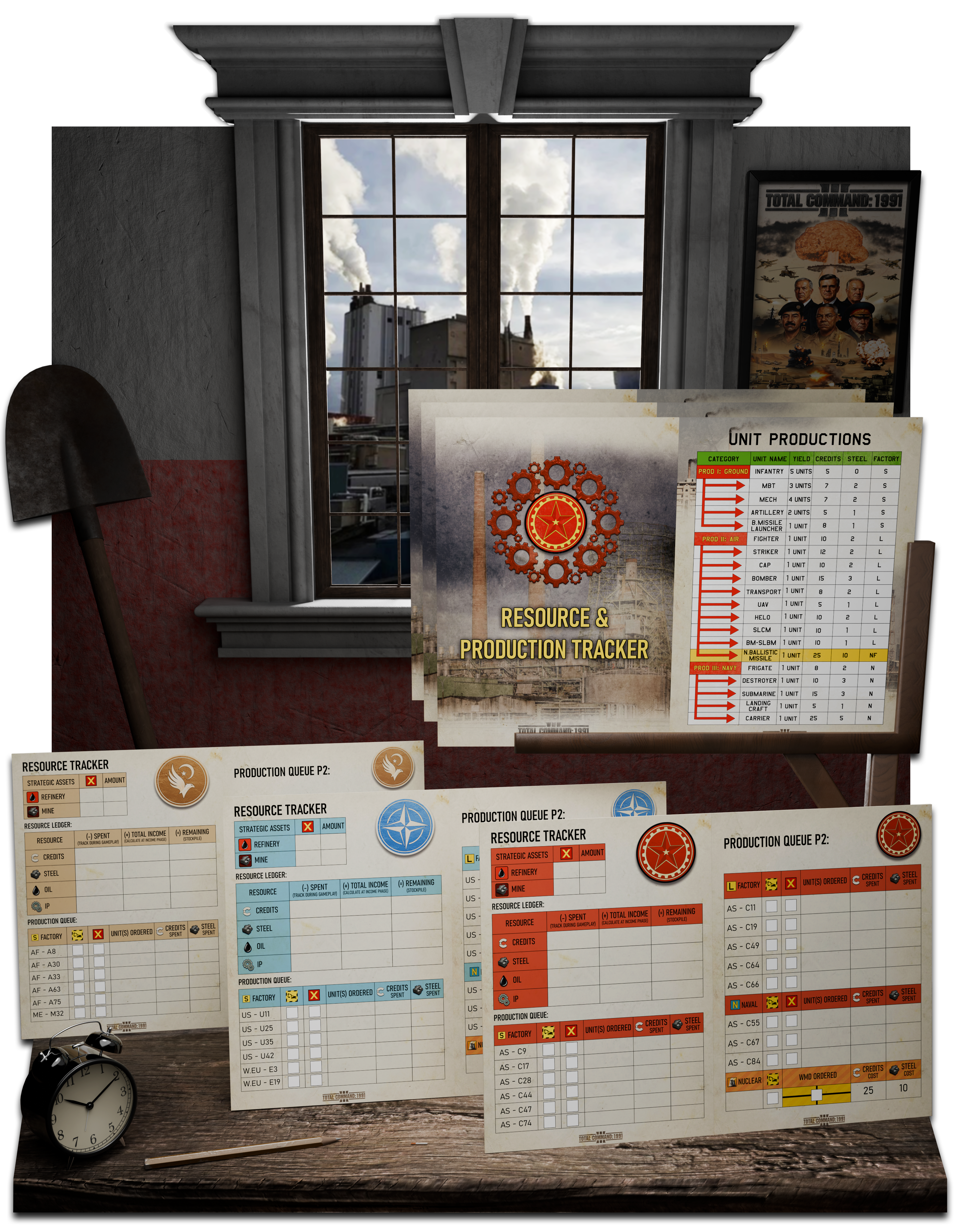
‎‎ ‎ ‎ ‎ ‎ ‎ ‎ └📊 𝘛𝘩𝘦 𝘗𝘳𝘰𝘥𝘶𝘤𝘵𝘪𝘰𝘯 & 𝘙𝘦𝘴𝘰𝘶𝘳𝘤𝘦 𝘛𝘳𝘢𝘤𝘬𝘦𝘳


This is the industrial engine of your nation. It handles the heavy lifting of turning raw materials into a global military force.

Maintain a live tally of your controlled Oil Refineries and Steel Mines to determine your nation’s base resource yield.

Real-time tracking of your Credits, IP, Steel, and Oil reserves.

Monitor the health and output of your industrial hubs across the map.

Manage multi-year build orders to ensure your reinforcements arrive exactly when needed.

╠═📍 𝙱𝚊𝚝𝚝𝚕𝚎𝚋𝚘𝚊𝚛𝚍 𝙸𝚖𝚖𝚎𝚛𝚜𝚒𝚘𝚗

‎‎ ‎ ‎ ‎ ‎ ‎ ‎ ├⚔️ 𝘎𝘳𝘰𝘶𝘯𝘥 𝘊𝘰𝘮𝘣𝘢𝘵 𝘉𝘰𝘢𝘳𝘥


The Ground Combat Board organizes everything involved in a land battle, from frontline units to terrain effects.

  • General Slot Place the General card that is commanding your units here. All your units in the battle will get his buffs, lowering your unit's target number to give you a much better chance of winning.
  • Frontline & Support Units are placed into five frontline positions, with additional slots for Artillery support and Close Air Support (CAS) from Helicopters or Striker aircraft.
  • Intel-Rogue Slot This slot is used for Intel Cards that influence the battle. However, the Rogue player has priority here, if they play a Wildcard, it can cancel the Intel effect and disrupt the plan.
  • Upgrade Slots Tech upgrades that you have researched are placed here so you can easily track your active bonuses during the fight.
  • Defense & Terrain Minefields, Fortifications, and Terrain markers such as Urban or Forest are placed on the board to track defensive advantages and environmental effects.
  • Reserve Area A holding zone for the second wave of units when multiple factions attack the same grid. Forces wait here while the first wave resolves their fight, ready to initiate a new battle if the defender survives the initial attack.

‎‎ ‎ ‎ ‎ ‎ ‎ ‎ └🚢 𝘕𝘢𝘷𝘢𝘭 𝘊𝘰𝘮𝘣𝘢𝘵 𝘉𝘰𝘢𝘳𝘥


The Naval Combat Board handles engagements at sea, from fleet battles to submarine operations.

  • Admiral Slot Place your assigned Admiral card here. Your fleet and your specific linked submarines will receive all of his tactical buffs during the battle.
  • Unit Slots (1–6) Six dedicated slots to organize your surface fleet for the engagement, including your Carrier if one is present in the battle.
  • The Wolfpack Zone A dedicated area for Submarines. Subs positioned here strike first, but they also become priority targets if enemy ships survive the opening attack.
  • Carrier Support A support slot tracks Combat Air Patrol (CAP), representing air cover provided by aircraft carriers during naval engagements.
  • SUNK Area A designated area for destroyed naval units. Keep track of your kills here, as each sunken enemy ship earns you an immediate Victory Point bonus.

Joint Operations: The board includes two Admiral slots, allowing allied Factions to coordinate their fleets and combine leadership bonuses during larger naval battles.

╠═🪦 𝙲𝚊𝚜𝚞𝚊𝚕𝚝𝚢 & 𝚆𝚊𝚛 𝙵𝚊𝚝𝚒𝚐𝚞𝚎 𝙱𝚘𝚊𝚛𝚍


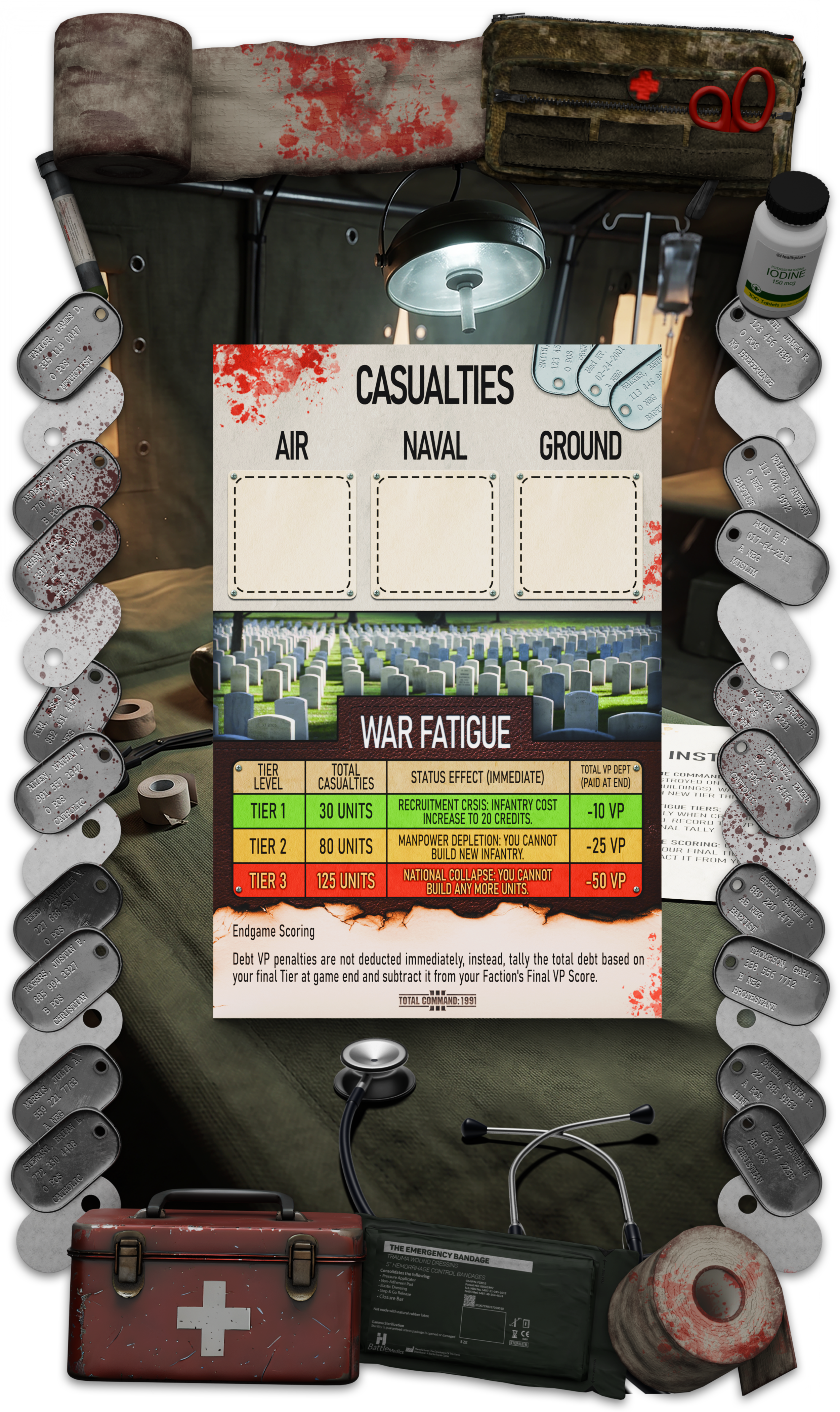
War has a body count, and in Total Command: 1991, public support isn’t infinite. The Supreme Commander uses a dedicated dry-erase board to track every manned unit lost in the line of duty.

As your losses mount, your nation enters higher War Fatigue Tiers. Crossing these thresholds triggers
immediate penalties, such as increased recruitment costs or a total halt on building new units.

Every unit lost adds to your Victory Points (VP) Debt. While these points aren’t deducted immediately, they are
settled at the end of the game.

╠═🎭 𝙱𝚕𝚞𝚏𝚏-𝙱𝚊𝚜𝚎𝚍 𝚂𝚝𝚛𝚊𝚝𝚎𝚐𝚢


The scale of Total Command: 1991 is massive, featuring an expansive system of mechanics that simulate the full spectrum of high-stakes military operations. While managing production lines and troop movements is vital, firepower alone will not secure victory.

In Total Command: 1991, deception is just as important as firepower. Factions rarely have perfect information, and much of the game revolves around misdirection, hidden defenses, and bluffing your opponents. Success depends on your ability to mask your true intentions and force your enemies to react to threats that may not exist while you strike where they are most vulnerable.
Tactical Deception: Bluff markers allow you to hide the true position of your forces and mislead your rivals about where your main attack will happen. Your opponents won’t always know which movements are real until the battle begins.
Hidden Defenses: Minefields, Fortifications, and Electronic Warfare (EW) remain hidden until combat starts. They can be revealed early through UAV drone reconnaissance, special Wildcards, or other intelligence actions, creating a constant tension between staying hidden and exposing the enemy’s defenses.
The HQ Gambit: Each faction deploys three HQ tokens: two decoys and one real headquarters, and that real HQ is what hosts your drawn General card. Once placed, your HQs are permanent installations and will not move for the entire game until they are destroyed. If an enemy discovers and attacks the real HQ, one of your fielded General cards is considered KIA and must be replaced. Because HQs also function as reinforcement points, opponents must decide whether to risk attacking a possible decoy or leave a critical command hub untouched.
Missile Uncertainty: When launching missiles, the attacker moves them across the map without declaring the final target. Defenders must decide where to activate their SAM systems before the missile reaches its destination.
Submarine Stealth: Submarines are tracked privately on the Submarine Board, keeping their exact position hidden from the other factions. While you wait for the right moment to strike, other factions will be hunting across the ocean grids, trying to force your submerged submarines to surface.

╠═🎨 𝙳𝚎𝚜𝚒𝚐𝚗𝚎𝚍 𝚋𝚢 𝙰𝚛𝚝𝚒𝚜𝚝𝚜

 
The Map: We modeled true 3D topographic terrain and integrated it directly into the map to give you the most realistic strategic experience possible. To make the world feel alive and grounded, we also integrated 3D world monuments and detailed forest environments into the landscape, making every theater of war deeply immersive.

The Cards: Every single card was built from scratch using a combination of Figma, Photoshop, and Blender. For the Rogue Nation cards in particular, we went a step further, creating custom 3D models in Blender and pulling those renders directly into Figma to give them a distinct, gritty look that stands out from the conventional factions.

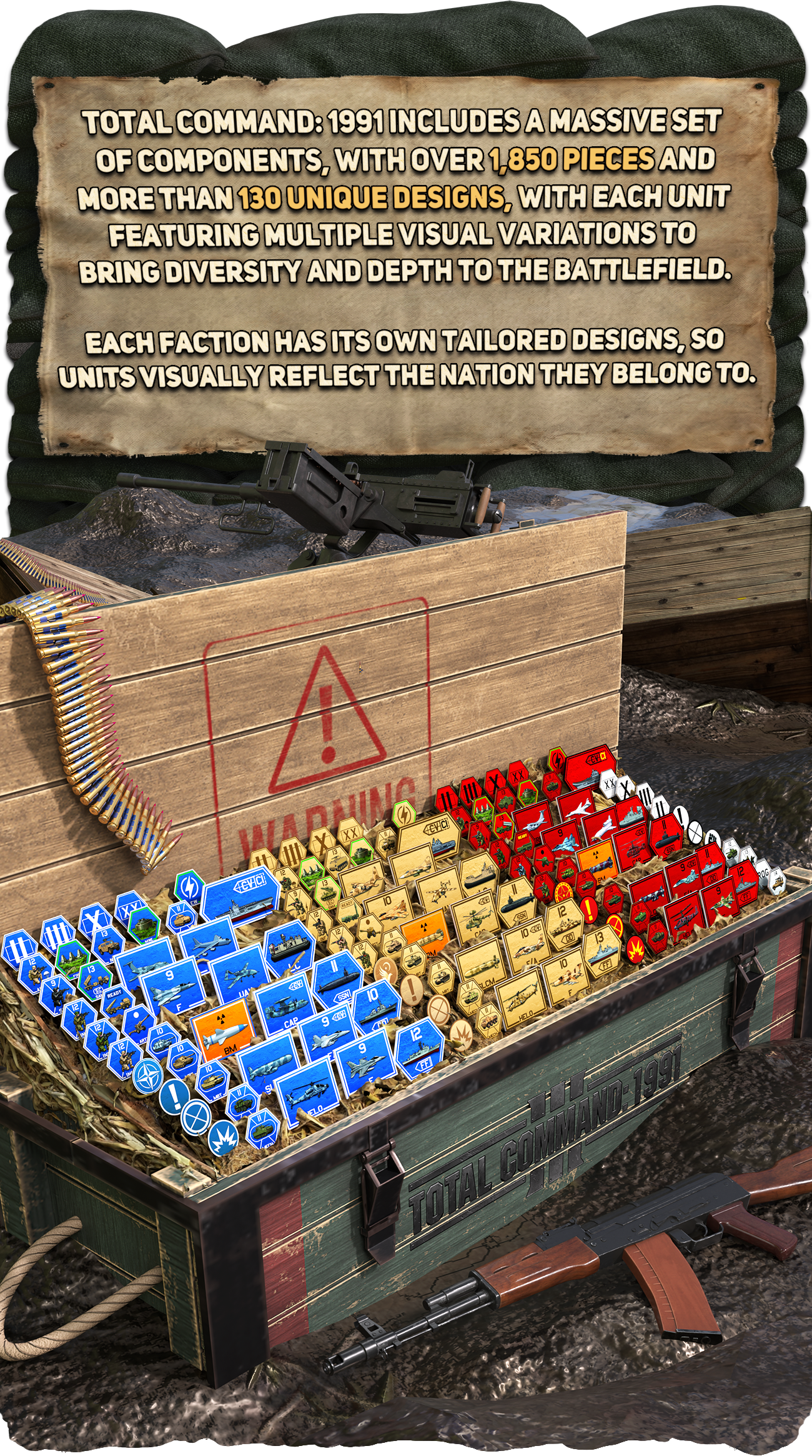
The Tokens: Instead of relying on generic icons, every token in the game is meticulously hand-drawn. We studied real-world military references from the era to make sure the equipment and hardware look exactly the way they should on your table.

Page Contents: The entire campaign page contents were modeled and animated in Blender, then edited in Premiere and After Effects.

╚═📡 𝙵𝚘𝚕𝚕𝚘𝚠 𝚝𝚑𝚎 𝙵𝚛𝚘𝚗𝚝

Images (3 · BoardGameGeek)

▶ Vidéos (0)

Pas encore de vidéo pour ce jeu.

Commentaires (0)

Connecte-toi pour commenter ou répondre.

Pas encore de commentaire. Lance la discussion.

Soutiens nous Ajouter un jeu

Aller sur la boutique ?

Ce lien est affilié. Si tu commandes après ce clic, la boutique peut verser une commission à MyNextPledge. Le prix pour toi ne change pas.

Tu quittes MyNextPledge pour le site du marchand (stocks, prix et conditions de vente relèvent uniquement de la boutique).

Continuer vers la boutique