
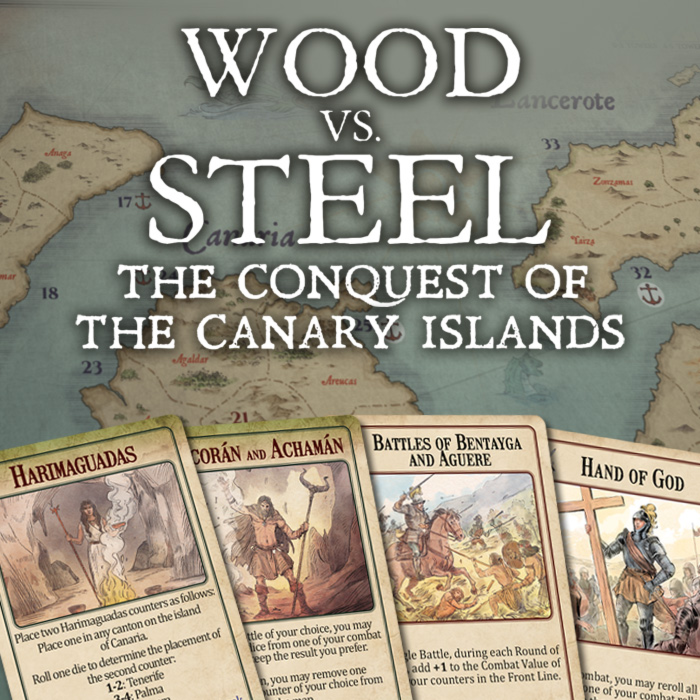
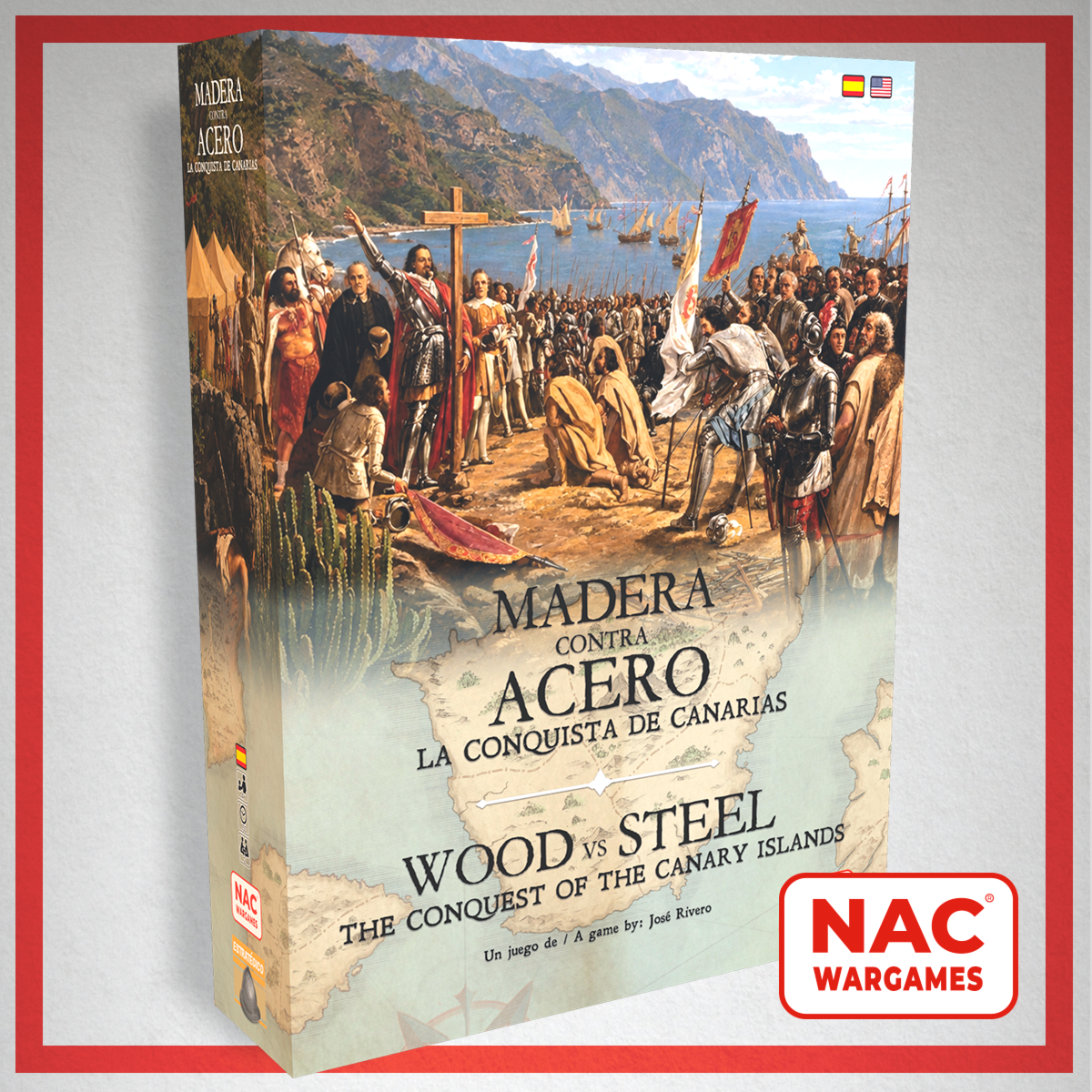
Wood vs Steel: The Conquest of the Canary Islands
Par Masqueoca
Statut actuel
Please note: all the material shown is preliminary.
Almost a century at the edge of the known world
The conquest of the Americas is remembered as swift. The conquest of the Canary Islands was not. From the first European landings to the fall of the last island, the archipelago resisted for 94 years (1402-1496).
Seven islands. Seven different peoples with common background. One Crown determined to make them its own, and another waiting for its chance.
To a 15th-century European, the Atlantic was not a highway but a frontier. Beyond the last familiar coasts lay the Mare Tenebrosum, the "Sea of Darkness", a place of rumors, fear, and unanswered questions.
The Canary Islands stood right on that threshold. The ancients had called them the Fortunate Islands, and for centuries they were remembered more as legend than as a real place.
A door to the Atlantic
By the 1400s, that door was opening. Genovese, Mallorcan, Portuguese, and Castilian ships probed the coast of Africa and the waters beyond it. For anyone dreaming of the Atlantic, the Canaries were the natural stepping stone: a place to land, resupply, and claim as a base. Whoever held the islands held the way west and south.
A world apart
Meanwhile, the Indigenous Canarians lived in relative isolation, with their own languages, customs, and ways of organizing each island. For them, this was not the edge of anything. It was home.
Two worlds met on those shores: one living quietly in its own small paradise, and one arriving hungry for conquest.
Iron meets stone
The Castilian soldier wore armor, carried a steel blade, and fought under the banner of a growing monarchy. The Indigenous Canarian fought with wood, stone, and a lifetime of knowledge of every ravine, cliff, and mountain pass.
On paper, it should have been over quickly. It was not.
A conflict with many players
Castile was not alone in looking west. Portugal also coveted the islands, and its interests turned the archipelago into a stage for international rivalry.
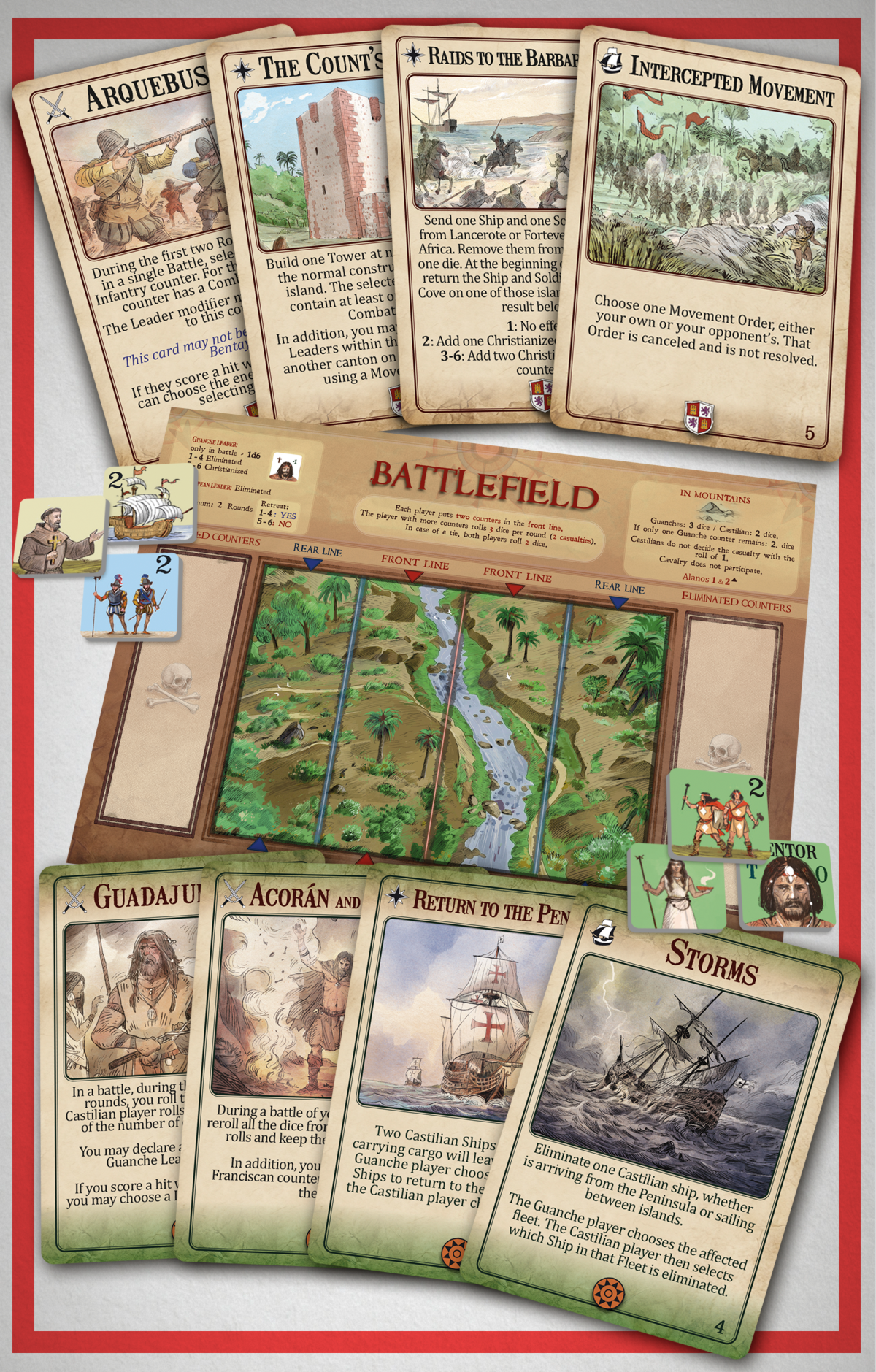
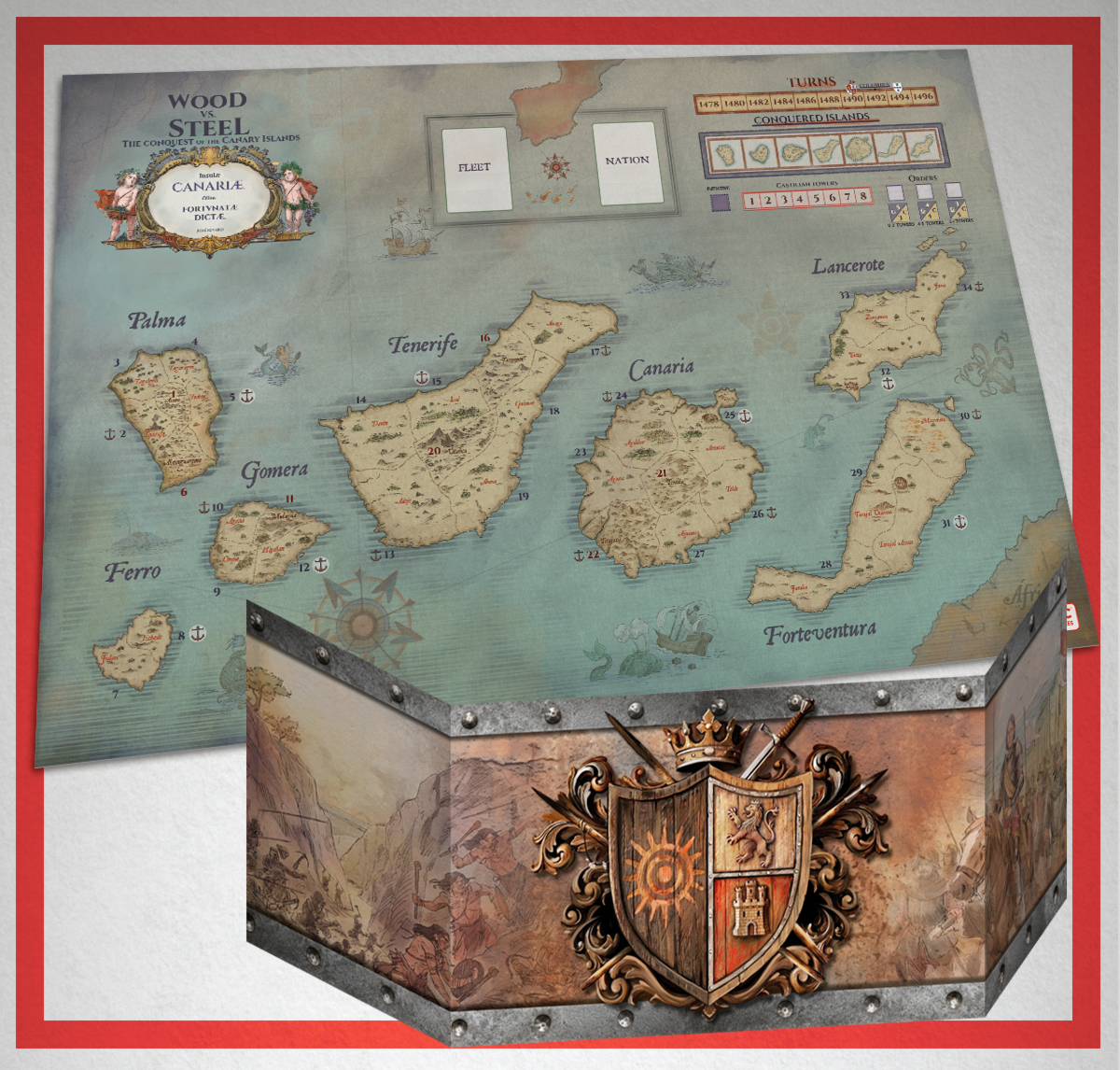
Wood vs Steel puts the whole archipelago on your table. The main board shows the seven islands divided into cantons, each with its own terrain, from coastal lowlands to the mountain strongholds where the Canarians made their stand.
Each player takes command of one side and plans in secret behind a concealment screen, using order sheets and markers to move troops, build towers, and send fleets. Castile brings soldiers, horsemen, and crossbowmen; the Canarians defend their land with warriors and local leaders, while Portugal has its own interests in the islands. More than 270 counters represent the armies and the men who led them.
Every side has its own Event deck, with revolts, ambushes, and moments like Columbus's passage in 1492. When armies meet, the clash is fought on a separate Battlefield board, where units are deployed and dice settle the outcome.
Don’t forget to follow the campaign to stay up to date on the latest news and receive an exclusive gift if, as we hope, you end up purchasing the game.
▶ Vidéos (0)
Pas encore de vidéo pour ce jeu.
Commentaires (0)
Connecte-toi pour commenter ou répondre.
Pas encore de commentaire. Lance la discussion.